Nakamichi 660ZX (1984)
A discrete-head cassette deck that delivers reference-grade analog performance with full manual control and automatic azimuth correction
Overview
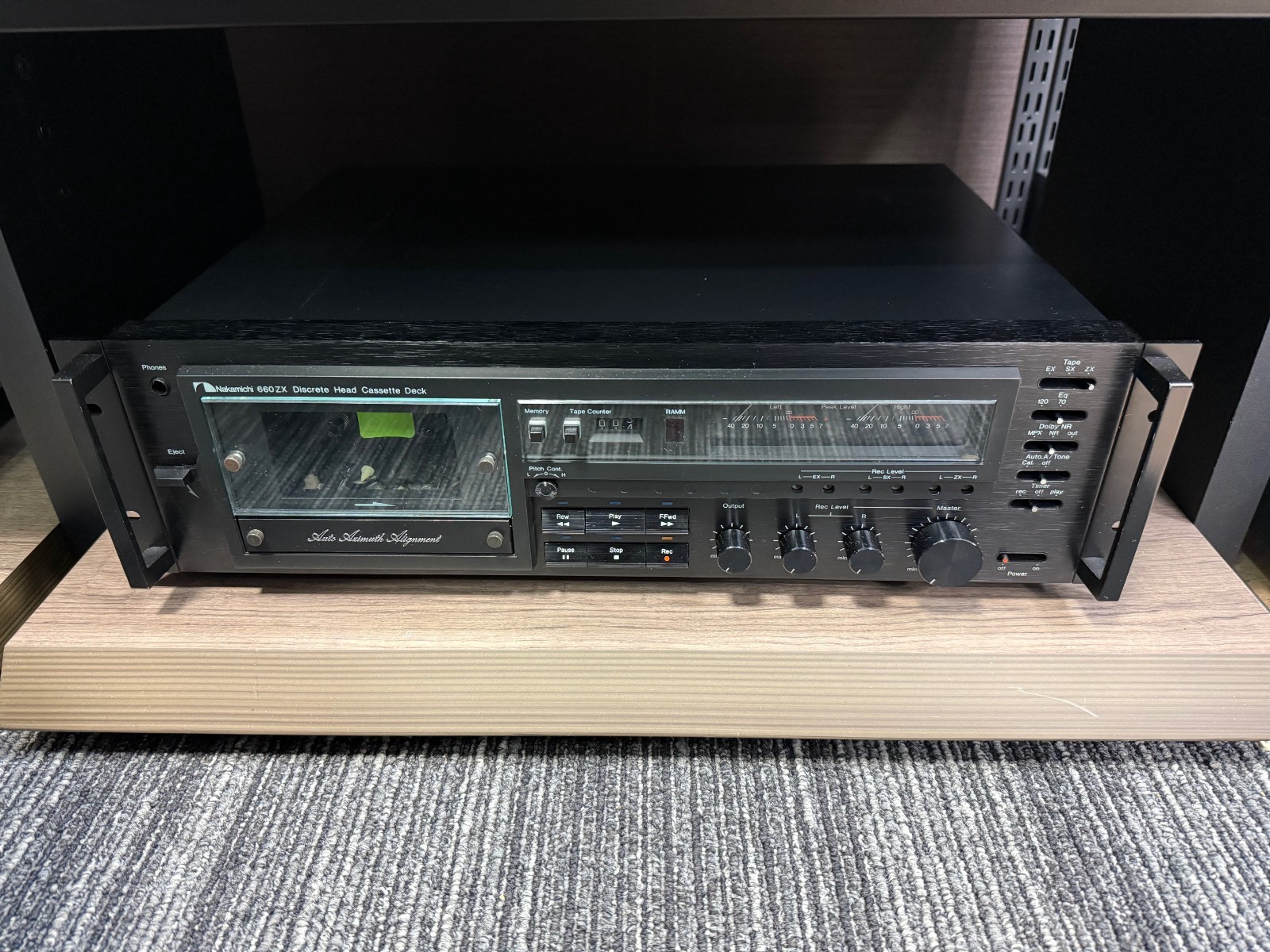
At approximately 9 kg, the Nakamichi 660ZX occupies rack space like a precision instrument—because that’s exactly what it is. This 3-head, full-track stereo cassette deck emerged during a golden era of analog tape engineering, when Nakamichi was pushing the limits of what the compact cassette could achieve. Introduced in 1979, the 660ZX wasn’t about automation or convenience; it was about fidelity, control, and mechanical excellence. Built for audiophiles, semi-pro studios, and tape purists, it offered a level of performance that placed it firmly between the earlier 600-series foundations and the later, more sophisticated 700ZX and 1000ZXL models. With a discrete three-head system—using the P-8L playback, R-8L record, and E-8L erase heads—the 660ZX allowed for independent optimization of each function, enabling real-time monitoring without generational loss and precise alignment tuning. The transport relied on a frequency-distributed double capstan system with dual direct-drive motors, ensuring rock-solid tape speed and exceptionally low wow and flutter at 0.04% Wrms. Its 4-track, 2-channel stereo system operated at the standard 4.8 cm/s, delivering a frequency response of 20Hz – 20kHz (with metal tape). While not as celebrated as the Dragon, the 660ZX represented Nakamichi’s commitment to reference-level analog reproduction in a user-serviceable, manually adjustable form.
Automatic Azimuth Alignment with P-8L Playback Head
One of the 660ZX’s most advanced features was its automatic azimuth alignment system, a rarity among manually operated decks. Unlike most high-end models that required careful manual adjustment, the 660ZX could dynamically correct head alignment during playback to maintain optimal high-frequency response. This system continuously monitored the signal and adjusted the P-8L playback head’s angle via motorized actuators, compensating for tape misalignment or wear. HiFi-Stereo (February 1980, p.13) described Auto Azimuth Alignment as “undoubtedly the most advanced and sophisticated innovation in cassette-recorder technology,” noting that it “launches a new era in high-fidelity recording.” Paired with the the system ensured accurate flux transfer across all tape types. Channel separation measured at 37 dB or more at 1 kHz, while crosstalk exceeded 60 dB under the same conditions, confirming the effectiveness of both the head design and the azimuth correction.
Frequency-Distributed Double Capstan System with Direct Drive
Tape speed stability is fundamental to low distortion and rhythmic accuracy, and the 660ZX delivered with a frequency-distributed double capstan system driven by dual direct-drive servo motors. Unlike belt-driven transports that suffer from stretch and slippage, this design used one motor per direction, eliminating mechanical wear and ensuring instantaneous start-up and precise tape travel at 4.8 cm/s. The system maintained a wow and flutter rating of 0.04% Wrms (0.08% Wpeak), among the lowest in its class. This level of speed consistency translated to tight bass, stable imaging, and a sense of timing that many users report as exceptional for jazz, classical, and acoustic recordings. The transport was further stabilized by a resonance-damping chassis made of aluminum alloy and resin-molded parts, which absorbed microvibrations and suppressed mechanical resonance. The result was a deck that didn’t just play tapes—it revealed them, with a clarity and neutrality that avoided coloration in favor of transparency.
Manual Tape Optimization with Front-Panel Controls
The 660ZX gave users full manual control over bias and equalization, a feature that set it apart from more automated competitors like Sony and TEAC. A 3-position tape selector allowed switching between EX (Type I, ferric), SX (Type II, chrome), and ZX (Type IV, metal) tapes, with independent 70 μs and 120 μs equalizer settings. The bias frequency was fixed at 105 kHz, optimized for high-performance formulations like TDK MA and Maxell XLI-S. Input sensitivity was rated at 50 mV/50 kΩ, while the line output delivered 1 V/2.2 kΩ (400 Hz, 0 dB), with a headphone output of 45 mW into 8 ohms. Dolby B and C noise reduction were switchable, and the circuitry was noted for its effectiveness without the pumping artifacts common in lesser implementations. Owners report that the Dolby C system, in particular, contributed to a signal-to-noise ratio of 66 dB or more (WTD rms, 70 μs), while metal bias could push this to 72 dB. The recording amplifier used a DC-coupled design with no coupling capacitor, reducing phase shift and improving transient response. A double NF (negative feedback) circuit applied feedback to the equalizer capacitors, further enhancing linearity in both recording and playback stages.
Historical Context
The Nakamichi 660ZX occupied a pivotal position in the company’s evolution, bridging the gap between the groundbreaking 600 series and the later, more automated 700ZX and 1000ZXL models. While it lacked the after-monitor function of the 670ZX, it retained the high-end mechanical and electronic standards that defined Nakamichi’s reputation. It was similar in design and era to the 681ZX, which appeared around 1981, but predated the fully auto-reversing mechanisms that would become signature features of later flagships. Marketed at ¥158,000 in Japan around 1980, the 660ZX was positioned as a serious tool for audio professionals and dedicated enthusiasts who valued manual calibration and mechanical integrity over convenience. It competed directly with high-tier models from Revox and TEAC but distinguished itself with superior head technology, azimuth correction, and build quality. The inclusion of a rack-mount adapter (19-inch width, EIA-standard) and compatibility with the optional RM-200 remote control (sold separately for ¥6,000) further reinforced its semi-pro orientation.
Collectibility & Value
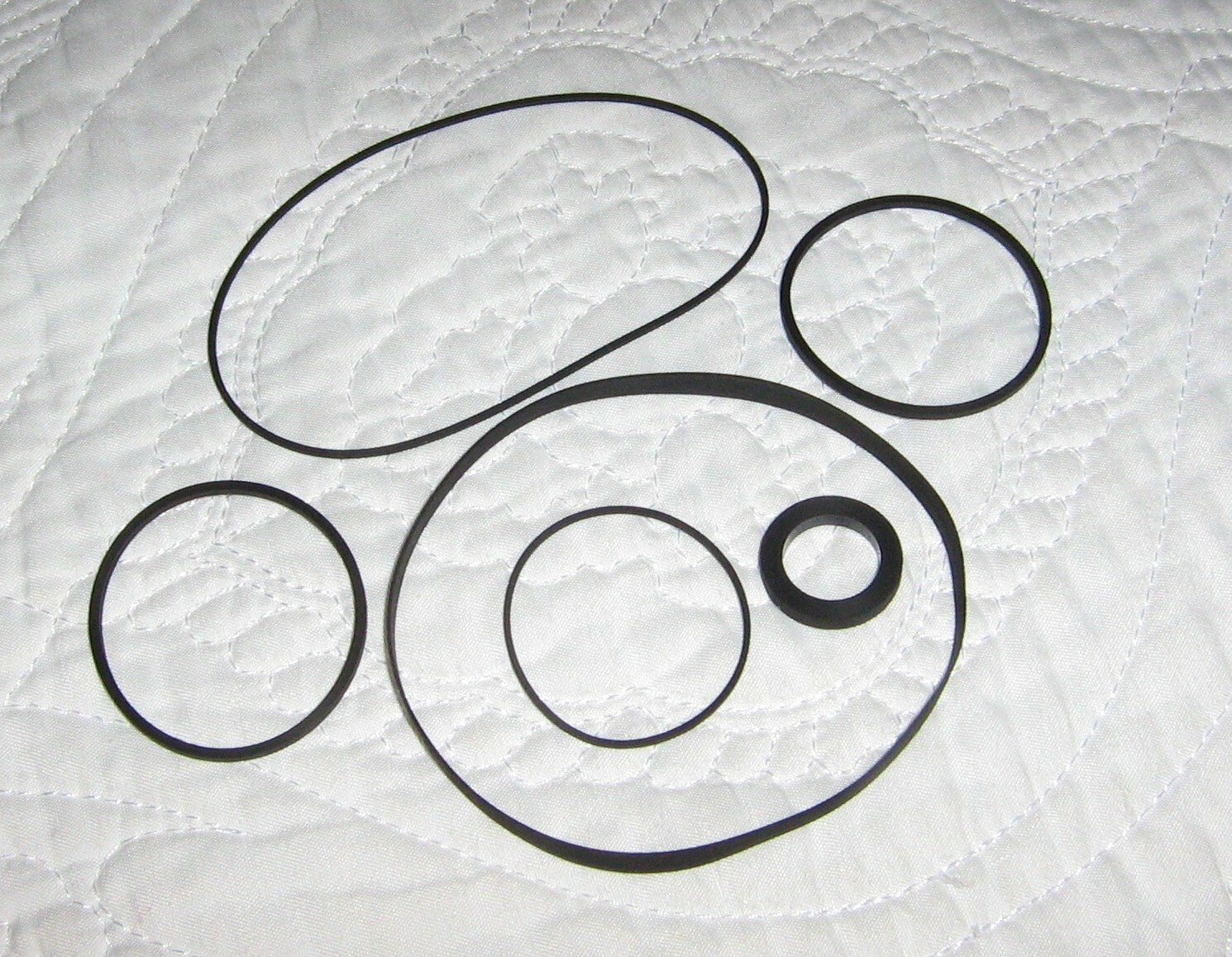
The 660ZX has gained steady respect among vintage audio collectors, though it remains more affordable than the legendary Dragon or 1000ZXL. In good working condition, prices typically range from $800 to $1,400, with fully recapped and aligned units from reputable technicians commanding the higher end. Listings on eBay and Audiogon have shown significant variation—examples like a “Nakamichi 660ZX Discrete Head Cassette Deck” selling for $549, while a “USED JAPAN” unit reached $2,900, likely reflecting condition, provenance, or bundling. Units with original packaging, manuals, and the RM-200 remote control carry a premium. Common maintenance issues include capacitor aging in the power supply and signal path, which often necessitates a full recap after 30+ years. The pinch roller can harden or glaze over time and should be cleaned or replaced, while ancillary belts (used in tape counter or door mechanisms) may dry out. Head alignment can drift with use, requiring professional recalibration every few hundred hours. Due to its complexity, the 660ZX is not recommended for beginner restorations. Owners consistently praise its neutrality and control, with many reporting excellent performance across jazz, classical, and rock genres when properly maintained.
eBay Listings


As an eBay Partner, we earn from qualifying purchases. This helps support our independent vintage technology research.
Related Models
- Nakamichi 1000ZXL (1985)
- Nakamichi 580 (1975)
- Nakamichi 670ZX (1984)
- Nakamichi 680ZX (1983)
- Nakamichi 682ZX (1980)
- Infinity RS-IIA (1977)
- Sony TC PB5 (1970s)
- Infinity RS-4.5 (1978)
- Sony TC-K333ESG (1989)
- Sony TC-K333ESJ (1991)