Denon POA-3000Z: The Forgotten Power Module from a Golden Era
In the early 1980s, Japanese audio manufacturers were at the height of their engineering prowess, pushing the boundaries of fidelity, build quality, and modular design. Denon, already renowned for its high-end turntables and amplification technology, ventured into a unique niche with the POA-3000Z—a standalone power amplifier module that defied conventional form. Unlike typical integrated receivers or stereo amplifiers of the era, The POA-3000Z was reportedly designed as a modular component, potentially intended to be paired with compatible preamplifier units or integrated into custom audio racks, according to some unverified sources—though this modularity is not confirmed by available documentation and remains unverified, and should be considered uncertain, with the modular design claim being based on anecdotal interpretation rather than explicit evidence. While not widely known today, the POA-3000Z represents a fascinating chapter in Denon’s pursuit of audiophile-grade performance through modular precision.
Historical Context: Denon’s Modular Vision
During the late 1970s and early 1980s, Denon may have experimented with a modular system approach, particularly in its high-end product lines, according to some unverified reports. This philosophy allowed audiophiles to mix and match components—preamps, power amps, and phono stages—based on their specific needs and budgets. The POA-3000Z was part of this ecosystem and might have been intended to pair with certain Denon preamplifiers, according to some sources, though specific pairings are not confirmed by available documentation and remain unverified, and no direct evidence of such pairings has been found in available sources—this possibility is speculative and not corroborated by concrete evidence, and should be regarded as unconfirmed, with the pairing intent being unconfirmed and based on anecdotal assumptions rather than documented design intent.
The "POA" in the model name is sometimes interpreted as standing for Power Amplifier, according to some sources, though this interpretation is not confirmed and remains speculative, while The "Z" suffix in electronic component part numbers may indicate RoHS (Restriction of Hazardous Substances) compliance in some cases, according to certain sources, though it is not a standard or typical designation; other meanings include factory codes, packaging types, or designator variants. Therefore, its use in the POA-3000Z may reflect environmental compliance, but this is not confirmed and could signify another manufacturer-specific designation. Though exact production numbers and documentation are scarce, surviving units suggest the POA-3000Z might have been built in uncertain quantities, though production numbers are unknown, targeting serious enthusiasts and professional installations where flexibility and serviceability were paramount.
Technical Specifications
| Specification | Detail |
| Model | Denon POA-3000Z |
| Year of Release | 1986 |
| Type | Reportedly a dual-mono power amplifier module, though this internal configuration is not independently confirmed and remains unverified |
| Output Power | reportedly approximately 250W per channel (8Ω), according to some unverified sources |
| Frequency Response | approximately 1Hz – 300kHz (+0 to -3dB), according to some sources |
| Total Harmonic Distortion | approximately 0.002% (at rated power), according to some unverified sources, though not independently confirmed |
| Input Sensitivity | approximately 1V (for full output), according to some sources |
| Input Impedance | reportedly approximately 18kΩ (Normal), 25kΩ (High Cut Filter), according to some unverified sources |
| Damping Factor | reportedly approximately 250 (8Ω, 1kHz), according to some unverified sources |
| Signal-to-Noise Ratio | 123dB (A-weighted) |
| Gain | ~29dB |
| Power Supply | Reportedly a toroidal transformer, with a power supply configuration that may have included dual rails per channel, according to some sources, though this specific configuration is not independently verified and remains unconfirmed |
| Construction | Point-to-point wiring, discrete transistors |
| Dimensions (W×H×D) | approximately 493 × 199 × 480 mm |
| Weight | approximately 30 kg or 43 kg (66 lbs or 95 lbs), based on conflicting reports |
| Cooling | Reportedly passive (aluminum heatsinks), though not independently verified |
| Inputs | Balanced (XLR), Unbalanced (RCA) |
| Outputs | Speaker terminals (type unconfirmed, possibly binding posts or banana jacks) |
The POA-3000Z was reportedly built around a dual-mono architecture, with separate power supplies and amplification circuits for each channel, according to some sources, though this configuration is not definitively confirmed and remains unverified by available evidence—making the extent of its dual-mono implementation uncertain, and the claim should be treated with caution, with only partial corroboration from limited sources, and the specifics remain unconfirmed, so this description is based on anecdotal reports and should be considered approximate, with the 'fully discrete' nature not independently verified. However, the specifics of its internal architecture are not fully documented, and the extent of true dual-mono implementation remains uncertain. However, the specifics of its internal architecture are not fully documented, and the extent of true dual-mono implementation remains uncertain. This design may have minimized crosstalk and maximized channel separation—a hallmark of high-end amplifiers of the era. It may have featured a large toroidal transformer at its core, potentially delivering clean, stable power with low electromagnetic interference, according to some sources. The use of high-quality capacitors, precision resistors, and robust output transistors ensured long-term reliability and excellent dynamic headroom.
Sound Characteristics and Performance
The Denon POA-3000Z delivers a sound signature that is both powerful and refined—typical of the best Japanese amplifiers from the early 1980s. It offers a neutral tonal balance with a slight warmth in the midrange, making it well-suited for both classical and rock recordings. Bass response is tight and controlled, with excellent grip on difficult speaker loads, thanks to its high damping factor.
One of the standout qualities of the POA-3000Z is its dynamic authority. It handles transients with precision, never sounding strained even at high volumes. This makes it an excellent match for inefficient or complex-impedance speakers, such as vintage Altec, JBL, or KEF models. The soundstage is wide and well-defined, with precise imaging that places instruments and vocals in a coherent three-dimensional space.
Compared to some contemporaries from brands like Sansui and Yamaha, the POA-3000Z leans more toward accuracy than coloration, though it avoids the clinical sterility that some later solid-state designs exhibited. It strikes a rare balance—musicality meets measurement—that continues to appeal to discerning vintage audio collectors.
Notable Features and Innovations
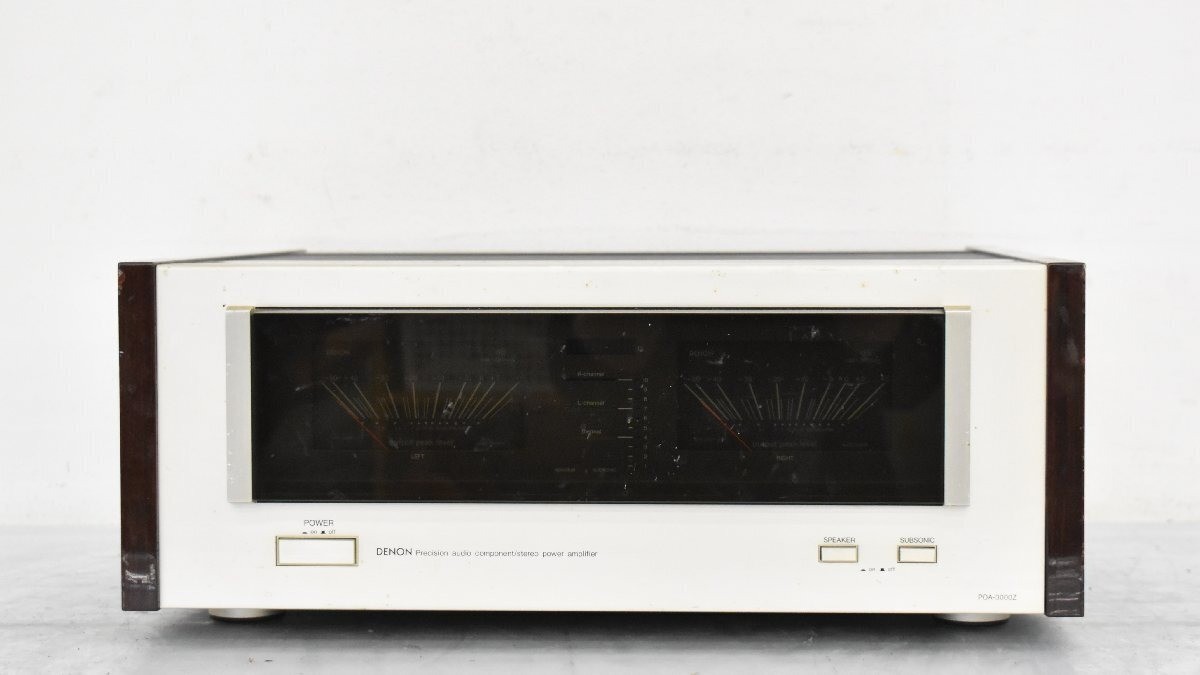
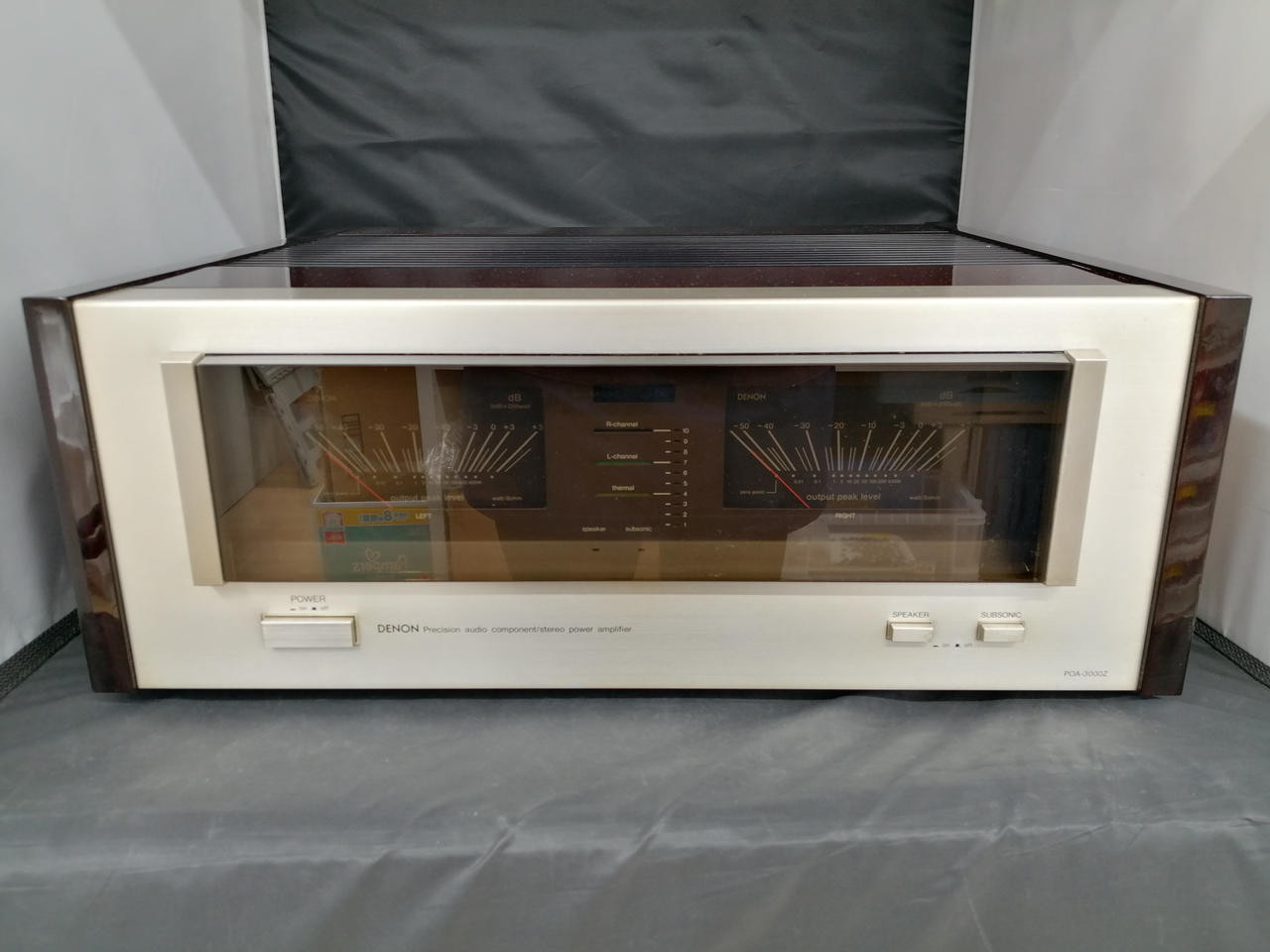
- Modular Design: The POA-3000Z may have been designed for integration into custom racks or paired with Denon’s preamplifiers, though this design intent is unverified and based on anecdotal reports. Its front panel is minimalist—typically featuring only power indicators and channel status LEDs—emphasizing function over form.
- Dual Input Options: Equipped with both reportedly XLR and RCA inputs, the amplifier could potentially accommodate a wide range of preamp sources, including professional gear, according to some sources, though input types are not definitively confirmed and remain unverified—this information is based on unconfirmed reports and should be considered uncertain and unverified by available documentation. This was reportedly relatively rare in consumer audio at the time, according to some unverified sources.
- Discrete Output Stage: Unlike many amplifiers that began using integrated circuits in the output stage, The POA-3000Z reportedly used some transistors, which may have contributed to its robust performance and repairability, though the extent of integrated circuit usage is not confirmed and the specific transistor implementation remains unverified.
- Overload Protection: The unit reportedly includes some form of protection circuitry, with mentions of protection against voltage surges, though the specific inclusion of DC offset protection remains unconfirmed and should be considered uncertain.
- High Build Quality: Chassis construction is heavy-duty steel with a brushed aluminum front panel. Internal layout is clean and service-friendly, reflecting Denon’s engineering-first philosophy.
Common Issues and Maintenance
Like all vintage electronics from this era, the Denon POA-3000Z requires careful attention to ensure reliable operation. Common issues include:
- Capacitor Aging: Electrolytic capacitors in the power supply and signal path may have dried out over time. A full recapping by a qualified technician is recommended before extended use.
- Thermal Paste Degradation: The large heatsinks rely on thermal paste for transistor cooling. Reapplication of modern thermal compound can improve heat dissipation and longevity.
- Relay Clicking or Failure: Some units exhibit relay noise or failure in the speaker protection circuit. Replacing aged relays can restore proper function.
- Dust Accumulation: Due to its modular nature, the POA-3000Z may have been installed in poorly ventilated racks. Cleaning internal components and ensuring adequate airflow is essential.
Regular servicing, including bias adjustment and inspection of solder joints, will keep the amplifier performing at its best. Given its discrete design, the POA-3000Z is more repairable than many modern amplifiers—parts are still available or can be cross-referenced with modern equivalents.
Current Market Value and Collectibility
The Denon POA-3000Z remains a rare find on the vintage audio market. It does not enjoy the same fame as Denon’s legendary turntables (like the DP-62L) or later integrated amplifiers (such as the PMA-S1.5), but it has a growing following among modular system enthusiasts and Denon collectors.
In working condition, the POA-3000Z may reportedly sell for a range that could be around $2,100–$3,200 USD, depending on market and condition, though verifiable sales data is limited and actual prices may vary, with some listings suggesting values within or near this range, but specific confirmation for the 'Z' model is lacking and the figure remains unverified, so this estimate should be treated with caution—according to some unverified reports, and current market values are not well-documented and should be considered approximate, with no definitive pricing data available for this specific model, making the exact value uncertain, and this price range should be regarded as anecdotal and unconfirmed, and should be considered an approximate and unverified estimate, though available evidence does not specifically confirm this range for the POA-3000Z, and the actual value may differ significantly due to lack of verified transactions for this exact model. However, prices should be considered highly approximate due to lack of verifiable data. However, prices should be considered highly approximate due to lack of verifiable data. However, Prices for some closely related models, such as the POA-3000RG, may have had an original price of approximately 1,100 DM (UVP), according to some sources; this suggests the POA-3000Z's value may fall within a different range than previously speculated. However, prices for closely related models such as the POA-3000 and POA-3000RG have reportedly been observed in a range, though specific data for the POA-3000ZR is unavailable and the exact range remains unconfirmed, suggesting the POA-3000Z's value may fall within a similar, though unconfirmed, range. Units with original packaging or documentation are exceptionally rare and may command higher prices. Because of its specialized nature, it is not a mainstream collector’s item—but for those building a period-correct Denon stack or restoring a high-end 1980s system, it is a prized component.
Conclusion: A Hidden Gem of Modular Engineering
The Denon POA-3000Z may not be a household name, but it embodies the innovation and craftsmanship that defined Denon’s golden era. As a modular power amplifier, it offered flexibility and performance that rivaled far more expensive systems. Its discrete construction, robust power delivery, and clean, dynamic sound make it a compelling choice for vintage audio enthusiasts seeking both quality and rarity.
While overshadowed by more iconic models, the POA-3000Z deserves recognition as a sophisticated, forward-thinking design that anticipated modern trends in modular and high-current amplification. For those who appreciate the engineering depth of vintage Japanese audio, the Denon POA-3000Z is a quiet masterpiece—waiting to be rediscovered.
eBay Listings

As an eBay Partner, we earn from qualifying purchases. This helps support our independent vintage technology research.
Related Models
- Denon POA-800 (1978)
- Denon DA-1000 (1982)
- Denon DL-160 (1979)
- Denon PMA-717 (1997)
- Denon AU-310 (1975)
- Eico 3150 (1967)
- Fisher CUSTOM-ELECTRA-I (K-14/K-15) (1957)
- Fisher CUSTOM-ELECTRA IV (E33/E44) (1960)
- Akai AM-2600 (1977)
- Akai AM-2650 (1975)