Leica IIIc (1940–1951)
A 35mm rangefinder camera with screw mount, built in Wetzlar, Germany, featuring a long-base coupled rangefinder and knob wind film advance.
Overview
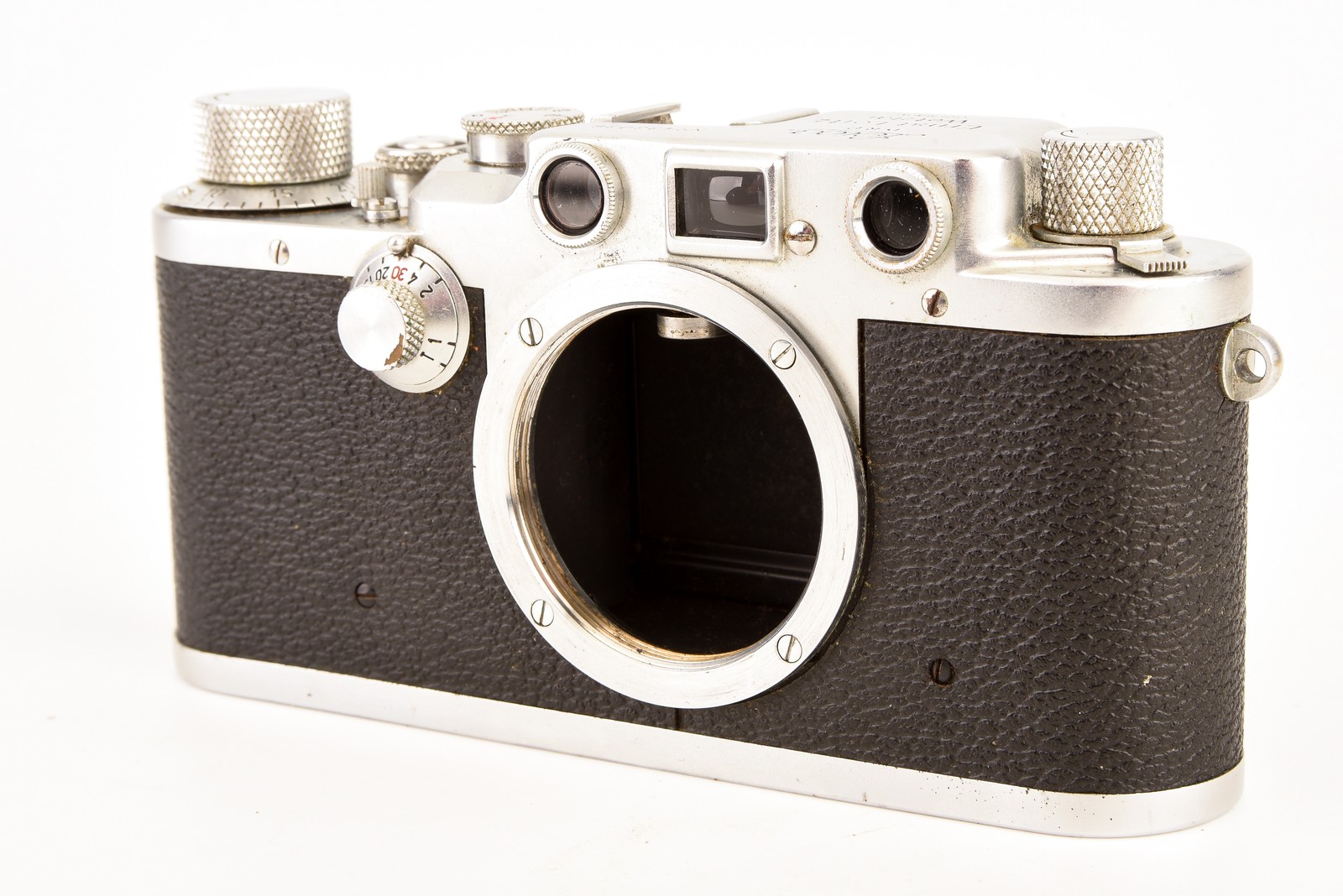
The Leica IIIc is a 35mm rangefinder camera produced by E. Leitz GmbH in Wetzlar, West Germany, from 1940 to 1951. It belongs to the lineage of Leica screw-mount (M39) cameras, designed for precision and durability with a metal body covered in vulcanite and a distinctive "shark skin" finish. The IIIc features a separate direct-vision viewfinder and a long-base coupled rangefinder with a swing prism mechanism, using a double-image system for accurate manual focusing. Film is advanced and rewound via knobs rather than a lever, with auto-stop on film advance linked to the shutter mechanism. The camera tensions the shutter during winding and includes an exposure counter. To rewind, a small metal button on the front must be pressed to release the rewind crank, which folds out for use. The IIIc lacks flash synchronization, distinguishing it from later models like the IIIf.
Specifications
| Type | 35mm rangefinder camera with screw mount |
| Film Format | 35mm film, 24×36 mm exposures |
| Years Produced | 1940–1951 |
| Lens Mount | M39 screw mount |
| Shutter | Focal plane, speeds 1 – 1/1000 sec, B, T; speeds 1/30, 1/40, 1/60, 1/100, 1/200, 1/500, 1/1000; second blind delay mechanism |
| Slow Speeds | Separate slow-speed dial selects speeds down to 1 second, plus T mode |
| Viewfinder System | Three windows: separate direct-vision viewfinder and rangefinder, plus secondary rangefinder window |
| Rangefinder | Coupled rangefinder, swing prism type, double image; long-base design |
| Diopter | Built-in diopter adjustment for the rangefinder |
| Flash Synchronization | No flash sync |
| Film Advance | Knob wind, not rapid wind lever; auto-stop coupled to shutter; tensions shutter |
| Rewind Mechanism | Press front button and fold out rewind crank to rewind |
| Construction | Vulcanite-covered metal body; bottom loading; all-metal construction, built for structural rigidity |
| Identification | "Shark skin" finish |
| Code Name | LOOHW – Camera |
| Serial Number Example | 469 |
Design
The Leica IIIc uses a full-metal body covered in vulcanite with a "shark skin" texture, providing durability and grip. It features a bottom-loading design and is built for structural rigidity. The camera has three front windows: one for a direct-vision viewfinder, one for the primary rangefinder, and a secondary rangefinder window. The coupled swing prism rangefinder supports precise focusing with double-image alignment. A built-in diopter allows for rangefinder correction without external tools. The film is advanced via a knob on the top right, with a separate rewind knob on the bottom left activated by pressing a release button on the front. The shutter mechanism uses a second-blind delay system to achieve intermediate speeds and includes a T (time) mode for long exposures.
Context
The Leica IIIc succeeded earlier models in the Leica III series and was produced during and after World War II, marking a period of continuity in Leica’s engineering despite global upheaval. It served as a direct predecessor to the IIIf, which added flash synchronization and a self-timer. The IIIc’s lack of flash sync and use of knob wind instead of a rapid lever reflect its transitional status—offering improved mechanical consistency over earlier models while retaining pre-war design principles. As one of the last widely produced Leica screw-mount cameras before the shift toward more integrated features, the IIIc remains a benchmark for mechanical reliability and optical precision in rangefinder design.
Market
The Leica IIIc is sought after by collectors and vintage camera enthusiasts for its robust build, historical significance, and role in the evolution of 35mm photography. Units in working condition with clean optics and smooth film transport command premium prices. Common issues include stiff or frozen winding knobs, light seals degradation, and shutter timing inaccuracies due to age. Because it lacks flash sync and uses manual knob winding, it is less practical for modern use than later models, but its mechanical simplicity and durability make it a favorite for restoration projects and historical study.
eBay Listings



As an eBay Partner, we earn from qualifying purchases. This helps support our independent vintage technology research.