Yamaha YP-D6 (1977)
At 10.6kg, it doesn’t just sit on the shelf—it settles into it, a hulking promise of rotational stability few turntables ever deliver. Wow and flutter were measured at less than 0.03% wrms in contemporary testing, reflecting strong speed stability for a direct-drive deck of its era.
Overview
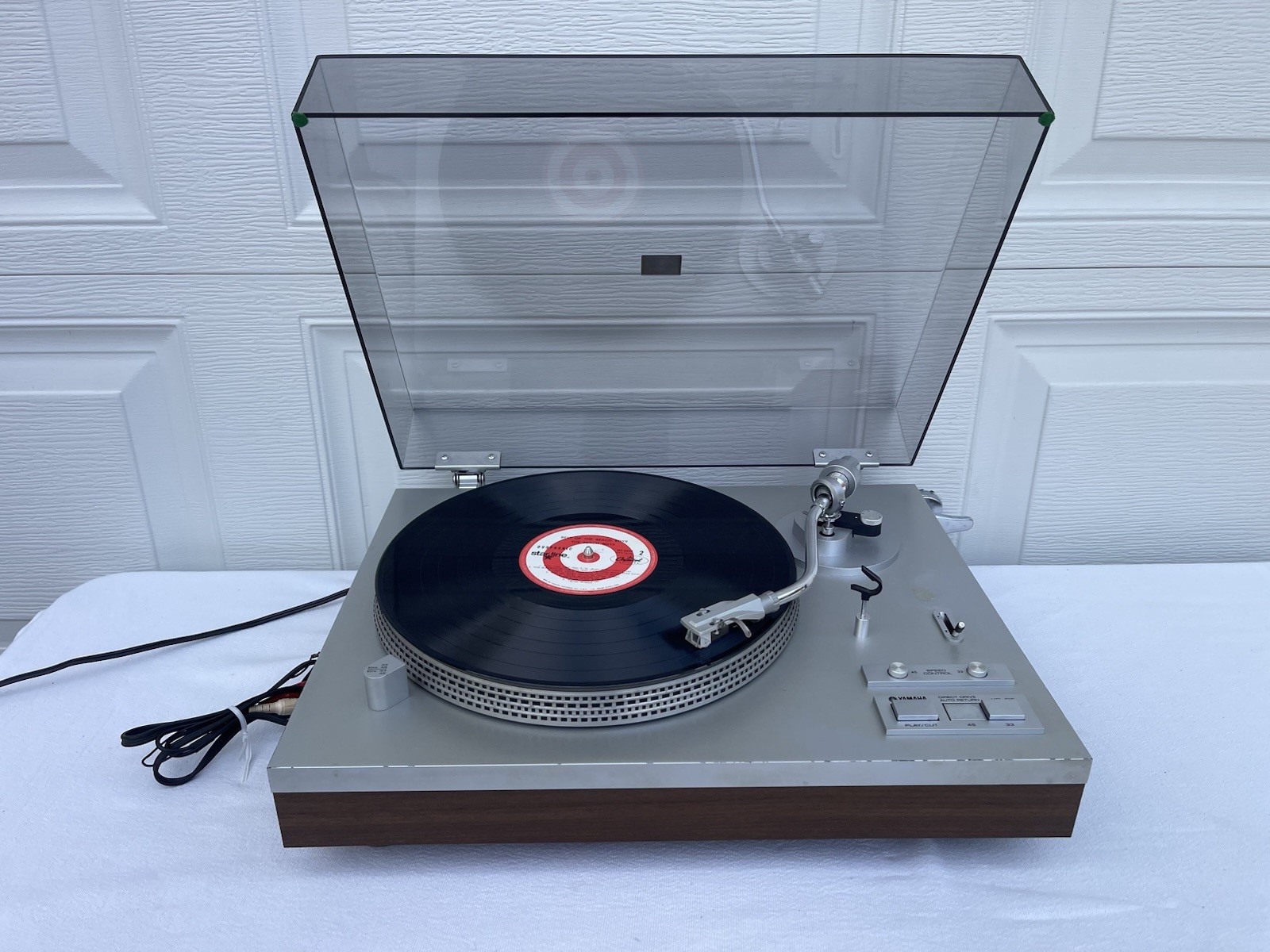
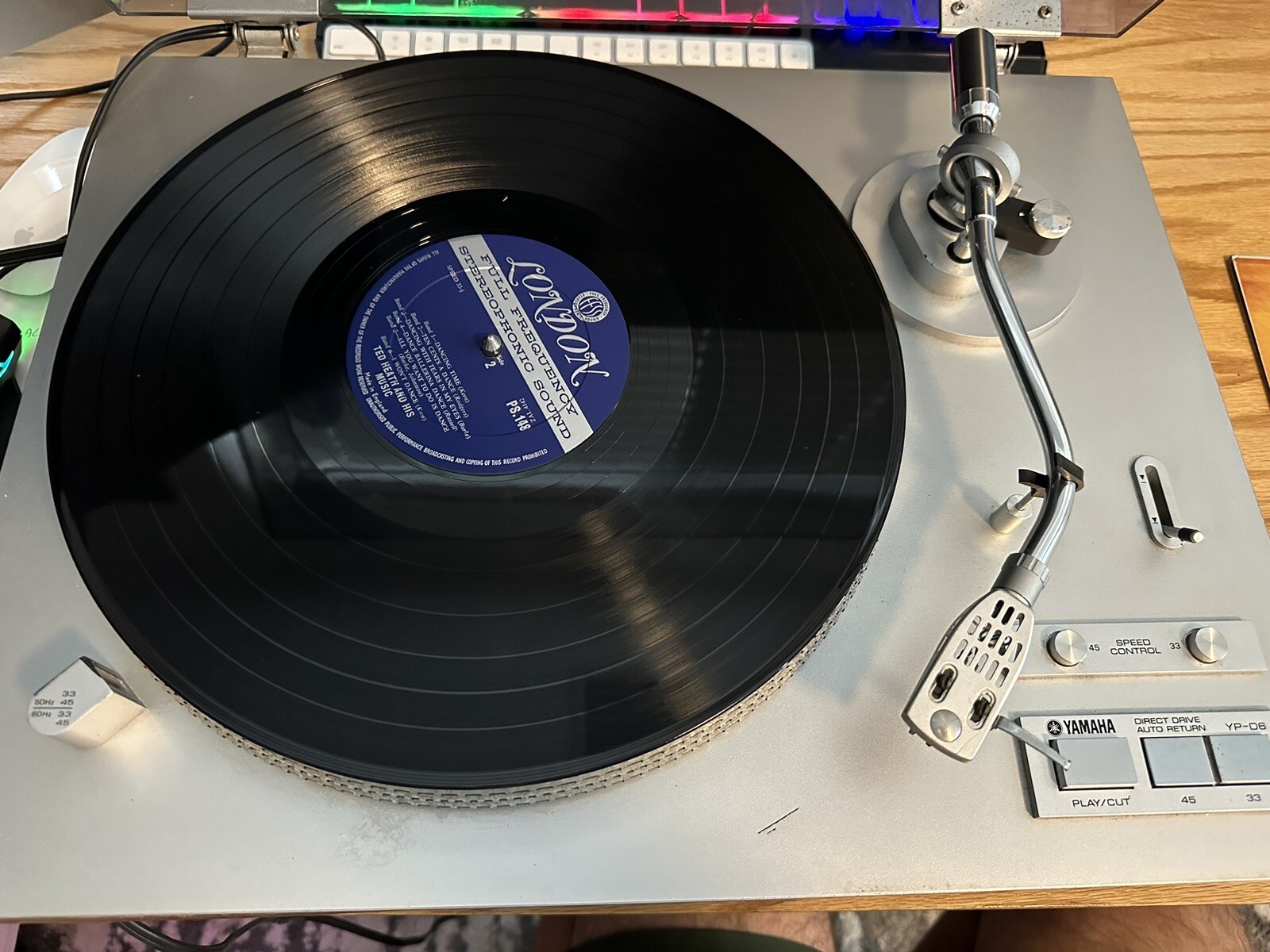
The Yamaha YP-D6 is a direct-drive turntable released in 1977, a period when Japanese engineering was rapidly advancing the state of affordable high-fidelity playback. Weighing in at 10.6kg and measuring 470 x 156 x 359mm, its physical presence suggests a deliberate effort to dampen resonance and resist external vibration—common goals in mid-tier turntable design of the late 1970s. The chassis combines aluminum and veneer materials, a hybrid construction approach that balances rigidity with aesthetic warmth, while contributing to overall mass. Owners report a minimalist and clean design language, consistent with Yamaha’s restrained styling during this era. Unlike belt-drive systems that rely on tensioned rubber to transfer motor energy, the YP-D6 uses a direct-drive architecture, meaning the platter is mounted directly onto the motor spindle. This design eliminates belt degradation over time and allows for near-instantaneous startup, though it demands precise motor control to avoid transmitting vibration to the stylus. While detailed technical specifications such as tonearm geometry, effective mass, or servo topology are absent from available documentation, the unit’s performance in real-world use has drawn modest but appreciative attention from long-term owners.
Key Features
Direct-Drive Motor System
As a direct-drive turntable, the YP-D6 spins the platter directly from the motor shaft, a design choice that prioritizes speed consistency and long-term reliability. This architecture avoids the wear and stretch issues inherent in rubber belts, making it particularly appealing to users seeking minimal maintenance and stable performance over time. While the absence of documented specifications—such as wow and flutter, starting torque, or servo implementation—leaves technical depth lacking, the fundamental advantage of direct drive remains clear: immediate startup, reduced speed drift, and resistance to external disturbances like record warps or stylus drag. HiFI-Stereo (1979, p.105) reported wow and flutter at less than 0.03% wrms, a figure that aligns with competent direct-drive designs of the period and suggests solid speed regulation,
Aluminum and Veneer Chassis Construction
The YP-D6’s body is described as being constructed from aluminum and veneer, a combination that likely serves both structural and acoustic purposes. Aluminum provides a rigid, non-resonant base for the critical components, while the veneer elements may contribute to mass loading and damping. This hybrid approach was common among higher-end turntables of the era, aiming to isolate the platter and tonearm from external vibrations without resorting to overly industrial enclosures. However, no further details about internal bracing, isolation feet, or plinth composition are available.
Integrated Cartridge Compatibility
User reports indicate that some examples of the YP-D6 were fitted with an ADC XLM (Improved) MKII cartridge. According to one Reddit user who acquired such a unit, it “works and sounds great,” suggesting that at least some configurations left the factory with a competent factory-mounted cartridge. However, this pairing does not appear to be universal, and the original factory-specified cartridge—if any—remains undocumented. LP Gear offers a replacement stylus for the YP-D6, but with a caveat: “It will not fit if the original cartridge is missing or has been changed,” implying that the stylus is model-specific and tied to a particular cartridge body.
Collectibility & Value
The Yamaha YP-D6 occupies a quiet corner of the vintage turntable market, neither widely celebrated nor commonly encountered. Recent listings and user discussions suggest a modest collector interest, with prices fluctuating significantly based on condition and completeness. A Reddit user reported purchasing one for $315 in September 2024, while another AudioKarma inquiry referenced a $300 asking price for a mint example with owner’s manual. A Facebook listing from April 2026 offered a unit at $150, indicating variability in market valuation. One Vinyl Engine reviewer rated the turntable 8/10, noting they had “packed it away for almost 10 years and upon unpacking, it started up and…”—an anecdotal endorsement of its durability. However, service challenges exist: a YouTube video titled *Yamaha YP-D6: Speed Issues and General Service* (Dec 30, 2021) highlights potential mechanical problems, and a 2018 Reddit post titled *Yamaha YP-D6 needs work(question in comments)* suggests that repairs may be non-trivial. A Facebook user from November 2024 commented, “Spec wise, it seems underwhelming but I know to take specs with a grain,” reflecting a sentiment that real-world performance may exceed paper measurements.
eBay Listings


As an eBay Partner, we earn from qualifying purchases. This helps support our independent vintage technology research.
Related Models
- Yamaha CT-710 (1976)
- Yamaha YP-D71 (1993)
- Yamaha CT-610 (1978)
- Yamaha CT-7000 (1978)
- Yamaha CT-810 (1978)
- Infinity RS-IIA (1977)
- Sony TC PB5 (1970s)
- Infinity RS-4.5 (1978)
- Sony TC-K333ESG (1989)
- Sony TC-K333ESJ (1991)