Teac A-480 (1977)
At approximately 9.5kg, it sits in your system like a promise—solid, unshowy, built to outlast the tapes it plays.
Overview
The Teac A-480 isn’t a machine for casual listeners. Introduced in 1977 and reportedly priced at approximately 950 DM at launch, it was positioned as a high-end stereo cassette deck during an era when Japanese manufacturers were pushing the limits of compact cassette fidelity. Despite one listing mislabeling it as a "reel-to-reel" deck, the A-480 is definitively a 2-head, single compact cassette machine—part of TEAC Corporation’s push to deliver near-professional performance in a consumer-friendly format. While not as widely recognized as the A-2300S or A-3340, the A-480 earned a quiet reputation among those who valued precise mechanics and transparent sound. It was engineered for critical listening and high-fidelity duplication, with features typically reserved for more expensive models, including manual bias and equalization controls. Owners report it was built in Japan with a heavy chassis and professional-grade transport, suggesting TEAC intended it as a serious contender in the upper-mid tier of cassette decks.
Key Features
2-Head Configuration with Separate Erase Head
The A-480 uses a 2-head layout: one combined record/playback head and a separate erase head. This design balances cost and performance, simplifying alignment while still supporting 4-track, 2-channel stereo recording and playback. While some listings incorrectly claim separate record and playback heads, verified sources confirm a 2-head configuration with one combined record/playback head and one erase head, which is typical of high-end consumer decks from this period. The system operates at a tape speed of 4.76 cm/s (1.87 ips), standard for compact cassettes, and supports CrO₂ tape formulation for improved high-frequency response.
Manual Bias and Equalization Calibration
One of the A-480’s standout features is its manual bias and equalization adjustment, accessible via front-panel trim pots. This level of user control was uncommon in mass-market cassette decks and allowed owners to optimize performance for different tape types. The equalization settings are reportedly set to 120µs (15 ips) and 180µs (7.5 ips), though exact values are not fully documented. This adjustability made the A-480 a favorite among enthusiasts who recorded from LPs or FM broadcasts and wanted the best possible signal-to-noise ratio.
Dolby B Noise Reduction
The deck includes Dolby B noise reduction, a significant feature for its class, helping to reduce tape hiss and improve perceived dynamic range. While some sources state the A-480 lacks built-in Dolby circuitry, some sources indicate the A-480 includes Dolby B noise reduction, while others state it lacks built-in circuitry but is compatible with external Dolby B units. This was a key selling point in 1977, when background noise could easily detract from high-fidelity listening.
Front-Panel VU Meters and Input Options
Flanking the cassette well are large VU meters, enabling precise monitoring of input levels during recording—a feature that helped prevent distortion and under-modulation. The A-480 includes both line and microphone inputs, making it suitable for direct recording from microphones or external sources. These inputs, combined with the meters, gave users semi-professional control over their recordings, a rarity in consumer decks.
Historical Context
The A-480 arrived at a pivotal moment in audio history—the late 1970s—when the compact cassette was rapidly evolving from a portable convenience to a legitimate high-fidelity medium. TEAC had already built a strong reputation with models like the A-2300 and A-3340, and the A-480 was positioned as a premium cassette deck for serious listeners, with one reviewer noting their purchase decision was influenced by its front-loading design High-Fidelity (March 1978, p.34). It was not marketed as a flagship, but its feature set suggests it was intended to bridge the gap between home audio and semi-professional use. Despite its capabilities, the A-480 remained relatively obscure compared to other high-end models of the era, possibly due to limited marketing or distribution. However, its presence in period literature and surviving units indicate it was a well-regarded machine among those who sought value without sacrificing performance.
Collectibility & Value
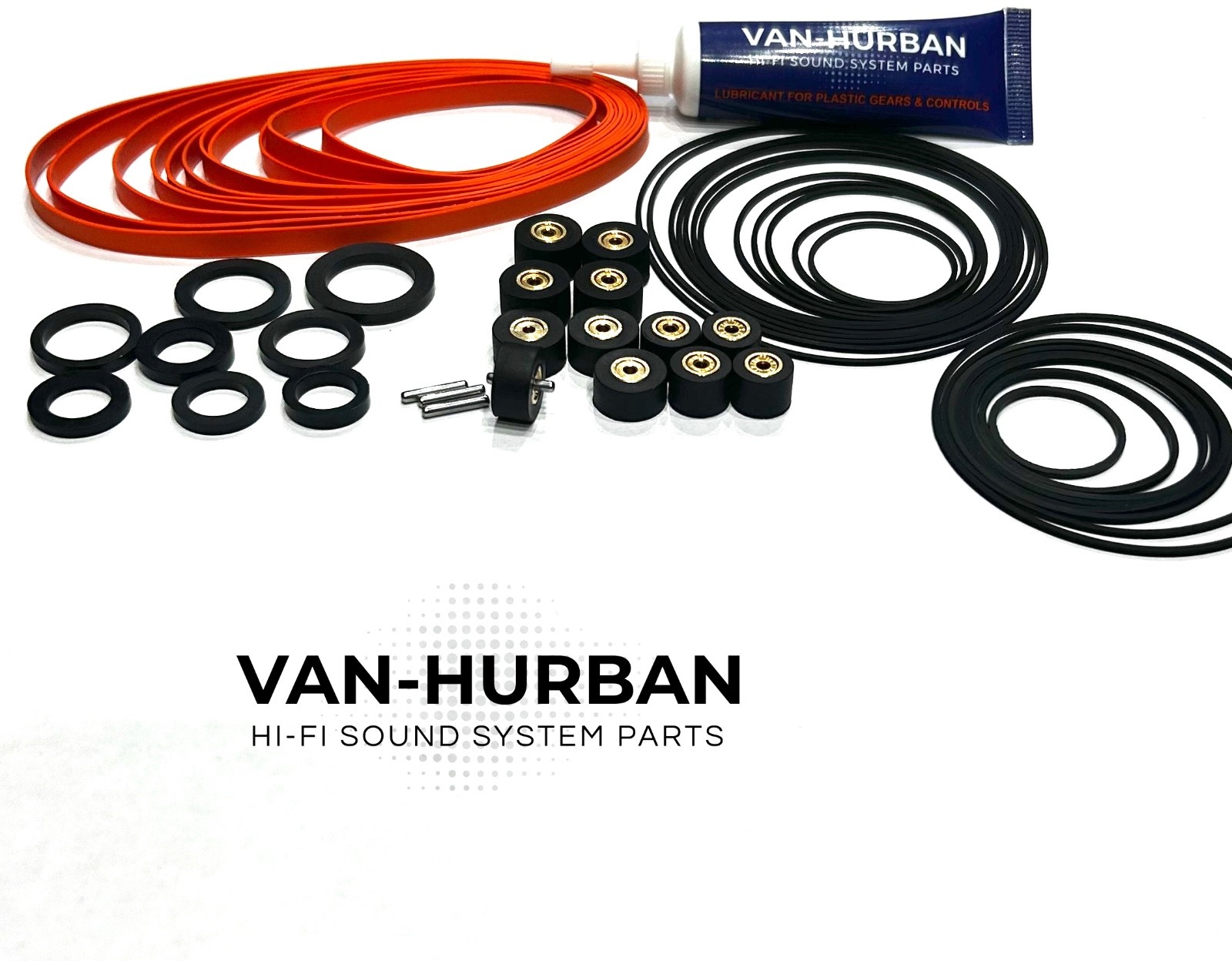
The Teac A-480 is not as common as some of TEAC’s more famous models, but it has developed a cult following among cassette deck enthusiasts. Well-maintained units in good working condition typically sell for between $400 and $700, though recent eBay listings show lower prices—such as a fully serviced unit listed at $131.09 and another at $102.65 with delivery. These discrepancies suggest that market value depends heavily on condition, provenance, and whether the unit has been professionally restored. Replacement parts, such as belts and service manuals, remain available through vintage audio forums and specialist suppliers, indicating ongoing community support. Common issues include deteriorated rubber components—particularly belts that can harden or stick to pulleys—and drift in bias and alignment settings over time. Owners report that regular cleaning with isopropyl alcohol and demagnetizing are essential for optimal performance, and professional realignment using calibration tapes is recommended for critical use. Despite these maintenance demands, the A-480’s modular design makes servicing relatively straightforward compared to more integrated designs of the era.
eBay Listings


As an eBay Partner, we earn from qualifying purchases. This helps support our independent vintage technology research.
Related Models
- Teac A-120 (1975)
- Teac A-160 (1975)
- Teac A-110 (1978)
- Teac A-1340 (1977)
- Teac A-330 (1978)
- Denon POA-800 (1978)
- Eico 3150 (1967)
- Fisher CUSTOM-ELECTRA-I (K-14/K-15) (1957)
- Fisher CUSTOM-ELECTRA IV (E33/E44) (1960)
- Akai AM-2600 (1977)