Denon DR-M44 (1984)
At 220 volts and clad in silver, this dual-capstan cassette deck was engineered to bring open-reel precision to the compact cassette—without the fuss.
Overview
The Denon DR-M44 isn't a phono cartridge. Despite some confusion online, the DR-M44 is a three-head, single compact cassette deck introduced in 1984 as part of Denon’s push into high-fidelity tape recording. Built by a division of Nippon Columbia known for turntables and digitally mastered LPs, the DR-M44 targeted serious listeners who wanted studio-grade performance from their cassette setups. Priced at $599.95, it occupied a premium tier—below the exotic DR-M33HX but well above mass-market decks. What set it apart wasn’t just its triple-head configuration or Dolby B/C noise reduction, but its dual-capstan transport system, a rare feature that promised tape stability usually found only on open-reel machines. Owners report that this design minimizes tape flutter and ensures consistent head contact, making the DR-M44 particularly adept at both playback and duplication tasks. A calibration computer allowed for precise alignment, while a single-memory rewind-to-stop function added convenience without cluttering the interface. The unit’s silver finish and clean front panel reflect Denon’s minimalist aesthetic—functional, not flashy.
HiFi-Stereo (July 1984, p.30) noted that the DR-M44 includes a three-head layout and dual-capstan drive, features typically reserved for professional gear. The same review highlighted its external timer-activated record capability, a nod to users building automated recording rigs. Unlike many contemporaries that relied on rubber idler wheels prone to drying and slipping, the DR-M44 uses a direct-drive system where a second servomotor belt-drives the secondary capstan, which differs slightly from the first—an arrangement HiFi-Stereo (July 1984, p.31) observed was factory-adjusted for optimal performance across ferric, CrO₂-equivalent, and metal tapes.
Three-Head Recording System with Dedicated Erase, Record, and Playback Heads
With separate erase, record, and playback heads, the DR-M44 eliminates the compromise of combined record/playback heads found on most two-head decks. This separation allows for immediate monitoring of newly recorded material without switching modes—a critical advantage for dubbing from LPs or CDs. The heads are aligned with precision, and the calibration computer enables users to fine-tune azimuth and level settings, ensuring compatibility across different tape formulations. Collectors note that this system contributes to the deck’s reputation for clean, low-crosstalk recordings, especially when paired with high-quality tapes.
Dual-Capstan Transport for Tape Stability
The dual-capstan drive is the DR-M44’s engineering centerpiece. While most cassette decks use a single capstan and rely on the cassette’s internal pressure pad to maintain tape tension, the DR-M44 employs two independently driven capstans—one at each end of the tape path. This design, derived from open-reel technology, holds the tape flat against the head assembly with even pressure, reducing modulation noise and improving high-frequency response. According to High Fidelity (June 1984, p.91), "extracting 'open-reel-like' performance from cassettes will involve miniaturized open reel technology," and Denon applied exactly that philosophy here. The second capstan is belt-driven by a dedicated servomotor, a detail mentioned in HiFi-Stereo (July 1984, p.31), allowing for nuanced speed control and reduced mechanical resonance.
Dolby B and C Noise Reduction
Equipped with both Dolby B and C, the DR-M44 handles a wide range of pre-recorded and user-made tapes. Dolby B provides moderate noise reduction for casual listening, while Dolby C offers deeper suppression of tape hiss, particularly in the upper midrange and treble—essential for high-resolution recordings. These circuits were standard on high-end decks of the era, but Denon implemented them with careful shielding to prevent interaction with the sensitive head amplifiers. Owners report that the noise reduction works transparently, without the pumping artifacts sometimes heard on lesser implementations.
Calibration Computer for Optimal Tape Alignment
Beyond basic level and bias adjustments, the DR-M44 features a calibration computer that guides users through alignment procedures. This system helps match the deck’s record electronics to specific tape types, improving consistency across different brands and formulations. While not as automated as later microprocessor-controlled decks, it was advanced for its time, allowing enthusiasts to achieve results closer to professional studio standards. The process requires test tapes and a voltmeter, but those who’ve gone through it report noticeably tighter bass and extended highs after proper setup.
Historical Context
Denon entered the cassette deck market with a clear mission: apply the same engineering rigor used in their turntables and open-reel recorders to the compact cassette format. The DR-M44 arrived in 1984, a period when audiophiles were increasingly using cassettes for time-shifting vinyl and CD collections. At $599.95, it competed with offerings from Nakamichi and TEAC but carved a niche by emphasizing mechanical precision over flashy features. Unlike Nakamichi’s auto-azimuth DR-7, the DR-M44 didn’t attempt to reinvent the format—it refined it. Its three-head, dual-capstan layout echoed Denon’s earlier DR-M33, suggesting a lineage of high-performance tape machines built for accuracy rather than spectacle. HiFi-Stereo (July 1984, p.30) observed that Denon was "very active in the tape field," and the DR-M44 served as proof that the company wasn’t just dabbling.
Collectibility & Value
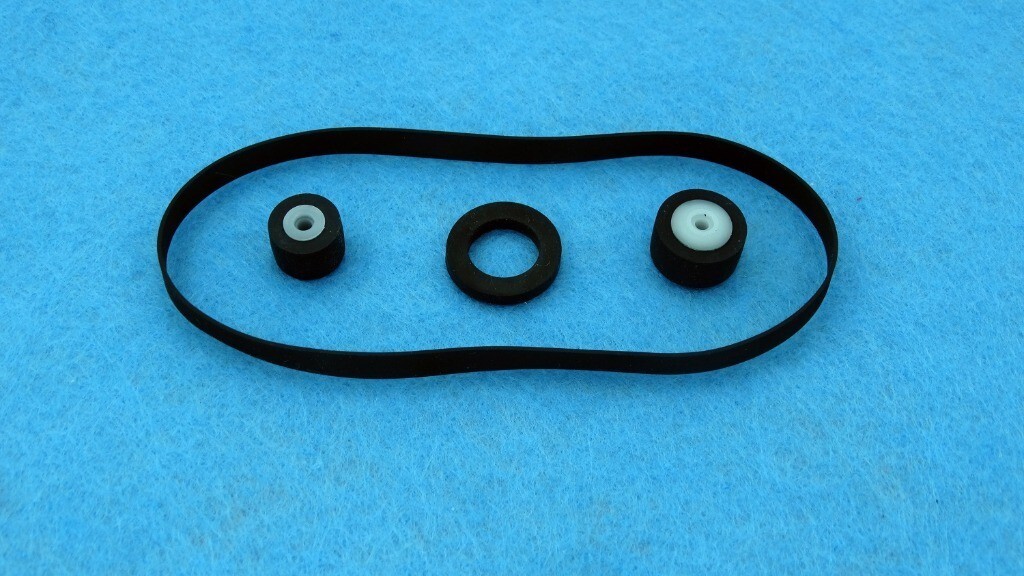
The Denon DR-M44 has not reached the collector status of the DR-M33 or DR-M44HX, but it maintains a quiet following among tape enthusiasts who appreciate its build quality and understated functionality. Units in working condition have surfaced on forums like AudioKarma, where one user reported picking up a DR-M44 for $15 in 2010 and restoring it to full operation. Listings on Reverb describe it as a “high-end” deck, though actual sale prices remain low—likely due to the lack of auto-calibration or digital displays that drive demand today. The 220-volt variants suggest European distribution, which may affect availability in North America. Replacement parts are scarce, and the dual-capstan belts can degrade over time, making fully operational units rarer than the number of surviving chassis might suggest.
eBay Listings


As an eBay Partner, we earn from qualifying purchases. This helps support our independent vintage technology research.
Related Models
- Denon DL-303 (1980)
- Denon DN-302F (1982)
- Denon DR-M1 (1985)
- Denon DRA-1000 (1978)
- Denon SC-5000 (1978)
- Quad 44/405-COMBINATION (1976)
- Braun AUDIO-1 (1965)
- Braun AUDIO-250 (1965)
- Braun AUDIO-310 (1965)
- Magnavox Component Systems (1972)