Leica Leicaflex SL (1968–1974)
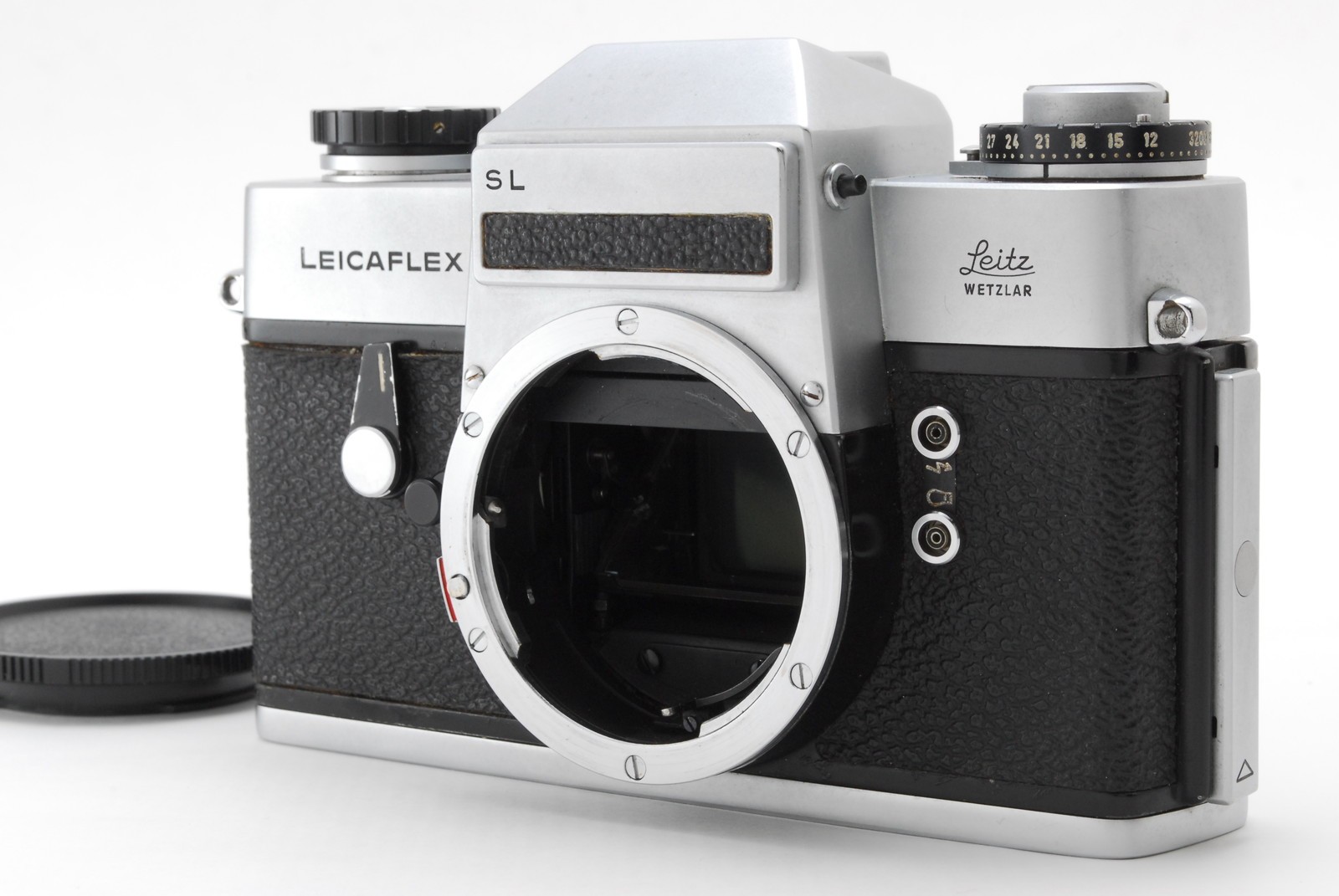
A 35mm SLR camera produced by Leica from 1968 to 1974, featuring a horizontal cloth focal-plane shutter and TTL metering powered by a mercury battery.
Overview
The Leica Leicaflex SL is a 35mm single-lens reflex (SLR) camera made by Leica from 1968 to 1974. It was designed as an advanced system camera for professional and enthusiast photographers, offering through-the-lens (TTL) metering and a robust mechanical build. The camera uses a Leicaflex bayonet mount and supports interchangeable lenses, with versions differentiated by features such as the lens release mechanism and film advance lever position. Over 70,000 units were sold during its production run.
Specifications
| Product type | 35mm SLR camera |
| Production years | 1968–1974 |
| Shutter type | Horizontal cloth focal-plane |
| Shutter speeds | 1 to 1/2000 sec., B |
| ISO range | 8 – 6400 |
| Dimensions | 148 x 97 x 57 mm |
| Weight | 770 g |
| Film format | 135 (35mm film) |
| Lens mount | Leicaflex bayonet |
Design
The Leicaflex SL uses a focal-plane shutter and houses a light meter cell on the floor of the mirror box, which relies on a mercury battery for operation. Repair procedures for the SL are similar to those of the earlier Leicaflex Standard, particularly in later versions. The meter cell may be either ribbed or flat, depending on the version. Some models feature a "3 Position Advance" mechanism, and there are at least four known versions of the Leicaflex SL.
Context
Market
Used Leicaflex SL bodies have sold for as low as $169.00 and as high as $300 in recent years. Known issues include inconsistent shutter timing at 1 and 1/2 second, which some users report as common, and potential light meter problems. Mercury batteries were originally used for metering, which may affect functionality today due to battery unavailability.
eBay Listings


As an eBay Partner, we earn from qualifying purchases. This helps support our independent vintage technology research.