Realistic OPTIMUS-5 (1980s)
At 88dB sensitivity and wrapped in oiled walnut, these unassuming towers deliver surprising punch for a thrift-store find.
Overview
They don’t scream “high-end,” but the Realistic Optimus-5 has earned its place as one of the most popular speaker systems in the Optimus line — a reputation built not on flashy specs, but on real-world performance. Marketed under Radio Shack’s house brand, these three-way tower speakers were designed to bring full-range sound to budget-conscious buyers without sacrificing the warm, natural tonality that defined 1980s home audio. Unlike the plastic-clad bookshelf models cluttering discount bins, the Optimus-5 wears its oiled walnut cabinets like a tailored jacket: modest, timeless, and built to last. Owners report a solid presence in the room, both visually and sonically, with a design that favors musical coherence over raw power. And while they may have started life as a mail-order option from a catalog, they’ve since become a “classic model” — even labeled a “later classic” — among collectors who appreciate their potential when properly restored.
What sets the Optimus-5 apart isn’t cutting-edge innovation, but thoughtful execution. As a 3-way, 3-driver loudspeaker system, it divides the audio spectrum across dedicated components, allowing each to operate within its ideal range. This architecture, common in higher-end designs of the era, helps reduce distortion and smooth out the midrange — a rare touch at this price point. The inclusion of a 1/2” ferrofluid-filled tweeter suggests attention to high-frequency detail and thermal stability, though original units may suffer from age-related degradation. Restoration is a known path among enthusiasts; forum posts document tweeter replacements and full rebuilds, often prompted by issues like “a bad rub” in the woofer or cabinets that have been “hacked-up” by previous owners. These aren’t museum pieces frozen in time — they’re working speakers, meant to be repaired, upgraded, and played loud.
Specifications
| Manufacturer | Realistic (Radio Shack brand) |
| Model | Optimus-5 |
| Type | Three-way tower speaker |
| Impedance | 8 Ohms |
| Power Capacity | 100 W (Music Power) |
| Power at 4 Ohms | 25 watts ± 1 dB |
| Frequency response | 38 to 20,000 Hz |
| Sensitivity | 88dB |
| Tweeter | 1/2” ferrofluid filled |
| Cabinet | Oiled Walnut Cabinets |
| Cabinet | Solid walnut veneer |
Key Features
Three-Way, Three-Driver Design
The Optimus-5 employs a true three-way configuration with three dedicated drivers, a design choice that enhances clarity by keeping each transducer within its optimal frequency band. This separation reduces intermodulation distortion and allows for a more balanced soundstage compared to two-way systems. While the exact sizes of the woofer and midrange drivers aren’t documented, the layout prioritizes tonal accuracy over bass exaggeration — a hallmark of the era’s more serious budget designs. The crossover network, though not detailed in available documentation, must handle the transition between drivers with enough precision to maintain coherence, especially in the critical vocal range.
Ferrofluid-Filled 1/2” Tweeter
Equipped with a 1/2” ferrofluid-filled tweeter, the Optimus-5 benefits from improved heat dissipation and reduced distortion at high volumes. Ferrofluid damping was still a relatively advanced feature in consumer speakers during the 1980s, typically reserved for mid-tier and above models. Its presence here signals that Realistic aimed for more than just basic functionality — they wanted clean, extended highs without the brittleness that plagued many budget tweeters. However, dried-out ferrofluid is a known failure mode over time, and owners undertaking restoration often cite tweeter replacement as a priority to restore full clarity.
Oiled Walnut Cabinet with Solid Veneer
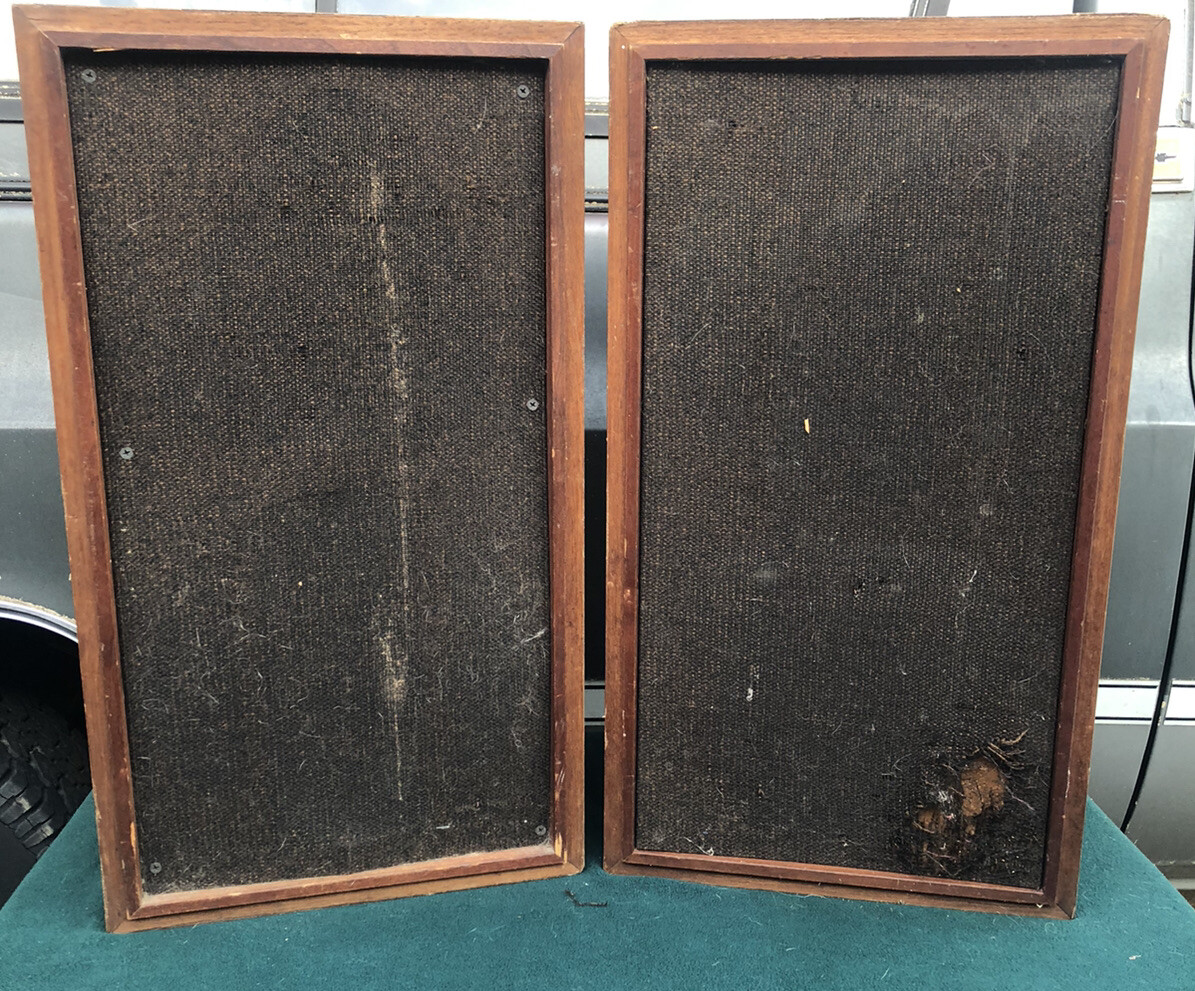
Housed in oiled walnut cabinets with solid walnut veneer, the Optimus-5 avoids the plasticky look of entry-level audio gear. The finish ages gracefully, developing a soft patina that complements living room furniture rather than clashing with it. These aren’t just enclosures — they’re acoustic chambers built to minimize resonance, and the use of solid veneer over particleboard or MDF (if used) suggests an effort to balance cost and performance. The cabinets contribute to the speaker’s identity as a “classic model,” blending aesthetic durability with functional design.
Historical Context
The Realistic Optimus-5 emerged in the 1980s as part of the broader Optimus speaker line, a series positioned above Radio Shack’s basic offerings and marketed toward listeners who wanted better sound without audiophile prices. It was one of the most popular speaker systems in the Optimus lineup, earning recognition as both a “classic model” and a “later classic” — a testament to its enduring appeal. While no official production dates or original pricing are available, its placement in catalogs and continued presence in collector circles indicates it filled a niche for affordable, full-range floor-standing speakers during a time when home audio systems were becoming central to household entertainment.
Collectibility & Value
Recognized among the “most collectible models” for Realistic, the Optimus-5 attracts attention from vintage audio enthusiasts and DIY restorers alike. Current asking prices vary significantly: listings show $190.00 CAD for a pair in working condition, while others appear at $65.00 CAD, suggesting condition and completeness heavily influence value. Thrift store finds have been reported at $15.95 and $29.00, underscoring their status as hidden gems for those willing to dig. Common issues include degraded woofers — one owner noted “a bad rub when I pushed in on it” — and cabinets that have been “hacked-up,” likely due to outdated connectors or failed mods. Given the frequency of restoration discussions, particularly around tweeter replacement, these speakers are often viewed not as pristine artifacts, but as serviceable projects with solid sonic foundations.
eBay Listings


As an eBay Partner, we earn from qualifying purchases. This helps support our independent vintage technology research.
Related Models
- Realistic SCT-10 (1979)
- Realistic SCT-86 (1983)
- Realistic CTR-23 (1975)
- Realistic SCT-20 (1978)
- Realistic SCT-21 (1975)
- Infinity RS-IIA (1977)
- Sony TC PB5 (1970s)
- Infinity RS-4.5 (1978)
- Sony TC-K333ESG (1989)
- Sony TC-K333ESJ (1991)