Onkyo TA-1900 (1980–1982)
That clunky silver box your buddy found at a yard sale for five bucks? Yeah, it might just play back your old mixtapes with more soul than you remember.
Overview
The Onkyo TA-1900 isn’t the kind of deck that leaps off the shelf with flashy buttons or a built-in graphic EQ. It’s a no-frills, single-capstan cassette deck from the early '80s that does exactly what it was built to do—play and record tapes with decent fidelity, solid mechanics, and the kind of reliability that lets it survive decades in basements and thrift stores. Built in Japan between 1980 and 1982, this 2-head, single compact cassette deck was part of Onkyo’s modest lineup during a time when cassette was transitioning from portable convenience to a legitimate hi-fi format. While not a flagship model, it reflects the company’s commitment to functional design and solid engineering, even in the mid-tier market.
Marketed simply as a stereo cassette tape deck, the TA-1900 was never going to compete with Nakamichi’s three-motor beasts or even Tandberg’s precision transports. But it wasn’t meant to. It’s the kind of machine you’d find bolted into a modest living room system, paired with an Onkyo receiver and a pair of bookshelf speakers, dutifully recording late-night radio shows or making copies of LPs for the car. Its identity as the ONKYO TA-1900-SM-TAPE-DECK in some service documentation hints at a modular or service-model designation, but in practice, it’s known simply as the TA-1900—a workhorse with a silver front panel and a mechanical tape counter that clicks forward with every revolution of the spool.
Key Features
Belt-Driven Single-Capstan Transport with DC Servo Motor
The TA-1900 relies on a belt-driven single-capstan transport system, a design common in mid-range decks of the era that balances cost and performance. While not as rigid as dual-capstan setups, it’s generally stable when maintained. The DC servo motor helps maintain accurate tape speed, contributing to consistent playback and recording. This setup avoids the complexity of multiple motors but still delivers respectable performance for its class.
2-Head Configuration with Direct-Load System
Equipped with a combined record/playback head and a separate erase head, the TA-1900 uses a direct-load system to press the tape firmly against the heads for improved contact and signal transfer. This design enhances high-frequency response and reduces signal loss, especially on metal tapes. Though basic by high-end standards, the configuration supports solid performance for a deck priced at $190 at launch.
Dolby B Noise Reduction and Metal Tape Capability
Dolby B is onboard to reduce tape hiss, particularly effective on chrome and metal tapes. With a signal-to-noise ratio of 61dB when Dolby B is engaged, the noise floor remains unobtrusive during playback, especially with well-recorded tapes. The deck supports Type I (ferric), CrO2 (chrome), and metal tapes via manual selection, allowing users to optimize bias and equalization settings. High-Fidelity (1981, p.29) noted the TA-1900 offered metal tape capability for $190, and a 1980 review stated it puts full high fidelity metal tape stereo within easy reach.
Peak-Reading VU Meters and Manual Tape Selection
Two large peak-reading VU meters provide real-time level monitoring during recording, helping users avoid distortion. These analog meters are a visual and functional upgrade over simple LED indicators found on cheaper decks. However, the tape type selection is entirely manual—there’s no auto-sensing. Users must select the correct tape type (I, II, or IV) based on the cassette in use, adjusting bias and replay EQ accordingly. This hands-on approach was standard for the time but demands user knowledge.
Mechanical 3-Digit Tape Counter
The three-digit mechanical counter advances with tape movement and can be reset to zero with a small button. It’s not useful for precise cueing, but it’s reliable and immune to power glitches or electronic failure. For many, that simplicity is a feature, not a bug.
Historical Context
Produced from 1980 to 1982, the TA-1900 arrived during a boom in cassette popularity, when home taping was both a cultural phenomenon and a legal battleground. At a price of $190, it was positioned as a basic deck offering solid performance without frills. A High-Fidelity (1980-10) review stated the TA-1900 represents an incredible achievement in both performance and economy, noting that few decks in its price range provided such sound quality.
Collectibility & Value
Today, the TA-1900 is not a sought-after collector’s item, but it’s far from forgotten. One user picked up a unit in 2023 for $4.99—proof that these decks are still turning up in the wild, often overlooked and undervalued. Current market prices for working units aren’t widely reported, but parts availability suggests a modest afterlife. Belt kits can be found on Amazon, and service manuals are available from sites like elektrotanya.com and manuals-in-pdf.com, making restoration feasible.
Owners report that while the original heads perform adequately, upgrading to a better head can dramatically improve sound quality. One reviewer noted, “With original head sounds not bad, but after replacing for better head sounds amazing!” Some users have reported issues such as hiss or hum from aging capacitors or problems in the playback circuit, but these are typical of cassette decks of this age and often repairable with basic servicing.
eBay Listings

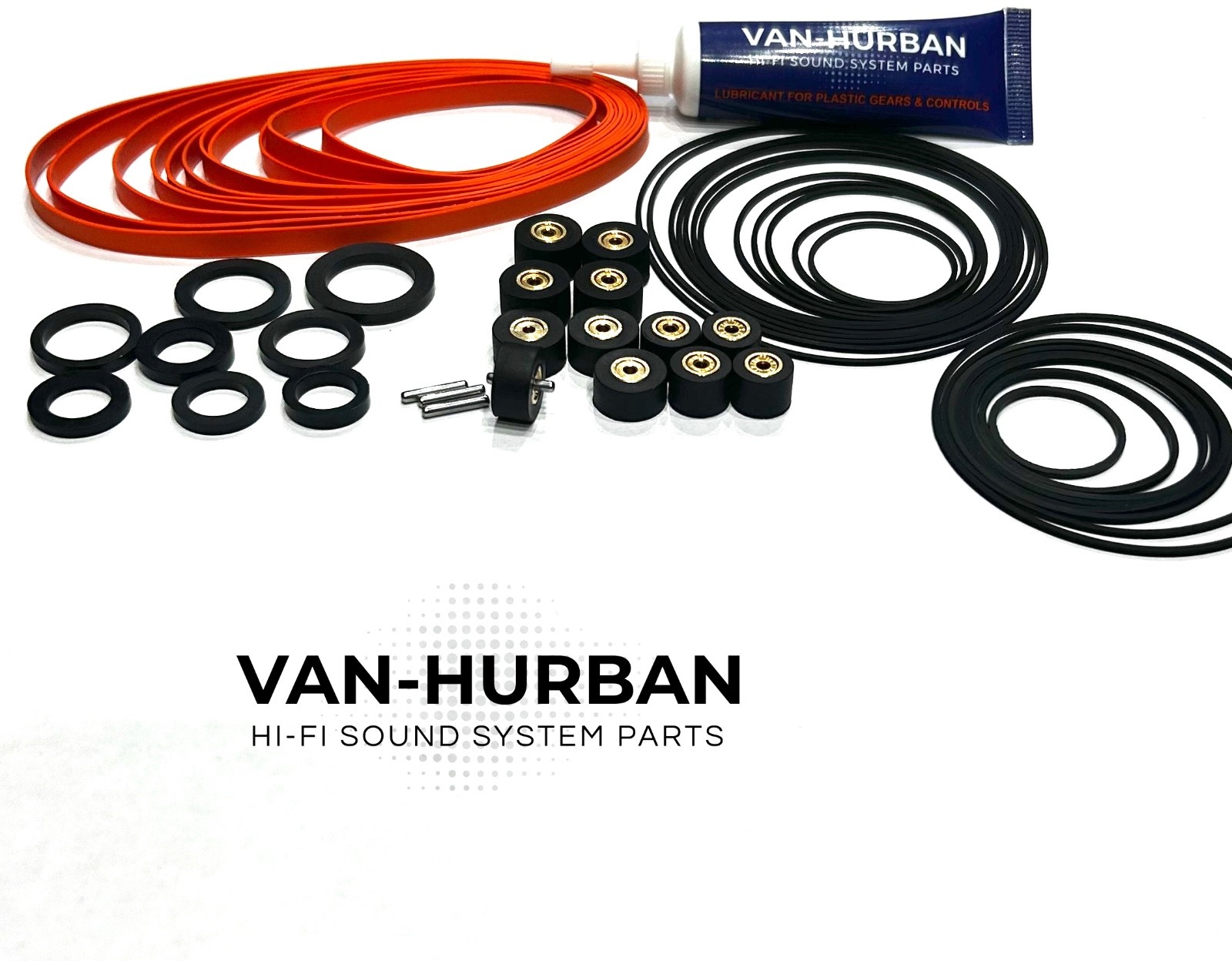

As an eBay Partner, we earn from qualifying purchases. This helps support our independent vintage technology research.
Related Models
- Onkyo A-300 (1976)
- Onkyo A-800 (1975)
- Onkyo A-812XG (1980)
- Onkyo CP-101A (1976)
- Onkyo SC-1500 (1978)
- Denon POA-800 (1978)
- Eico 3150 (1967)
- Fisher CUSTOM-ELECTRA-I (K-14/K-15) (1957)
- Fisher CUSTOM-ELECTRA IV (E33/E44) (1960)
- Akai AM-2600 (1977)