JBL 2441 Compression Driver (1981)
At over 11 kg and packing a 4-inch aluminum voice coil driven by an Alnico V magnet exceeding 10 kg, the 2441 isn't just a driver—it's a statement in cast metal and precision engineering.
Overview
The JBL 2441 Compression Driver, released in 1981, stands as one of the final and most refined expressions of JBL’s large-format compression driver lineage before the industry’s shift toward neodymium and titanium diaphragms. Marketed at ¥145,000 per unit in Japan around its launch, it was never intended for the casual buyer but for professional installations demanding reliability, power, and smooth high-frequency extension up to 18 kHz. Built as a driver unit suitable for sound reproduction in large halls and theaters, the 2441 evolved directly from the legendary JBL 375, sharing its 4-inch voice coil and Alnico V magnet philosophy but refining the design with a computer-optimized phase plug and a unique diamond-pattern suspension diaphragm. Owners report it delivers a peak-free, extended response that holds up under punishing program material—a necessity in touring sound reinforcement and flagship studio monitors like the 4355, 4344, and 4350, where it handled the critical midrange band from 500 Hz upward. The 2-inch throat (50.8 mm) ensures compatibility with JBL’s professional horn systems, including the 2307/2308 bi-radial assembly, while the massive Alnico structure contributes to both its weight—approximately 11.3 kg—and its reputation for magnetic stability over decades of use. Despite its heft, collectors note the 2441’s build quality borders on over-engineered, with edgewound aluminum ribbon voice coils and a die-cast housing that resists deformation even under high thermal load.
Key Features
4-Inch Aluminum Voice Coil with Edgewound Ribbon Construction
The 2441’s 100 mm (4-inch) voice coil is among the largest ever used in a production compression driver, allowing for exceptional heat dissipation and power handling. Constructed from aluminum ribbon wound on edge, the coil minimizes mass while maximizing surface area for cooling, a design choice critical for sustaining high output without compression or distortion. This edgewound ribbon construction, confirmed in technical documentation, supports the driver’s rated 70 to 100 watts of continuous program power, depending on the source, and enables operation at 500 Hz and above without thermal failure. Engineers at the time emphasized that the coil’s geometry was optimized using laser holography and computer analysis, ensuring linearity under extreme excursions.
Alnico V Magnet Structure Exceeding 10 kg
At the heart of the 2441 lies an Alnico V magnet assembly weighing over 10 kg, delivering a magnetic flux density reported as high as 20,500 gauss in catalog specifications. This massive magnetic circuit provides a stable, high-flux field that contributes to the driver’s efficiency and dynamic response. Unlike ferrite or neodymium magnets, Alnico V is less prone to demagnetization over time, which explains why owners report that vintage units rarely require recharging. The magnet’s sheer mass, however, makes the 2441 exceptionally heavy and necessitates robust mounting hardware—something installers learned quickly when retrofitting older systems.
Aluminum Diaphragm with Diamond-Pattern Suspension
The 100 mm (4-inch) diaphragm is made from 0.08 mm aluminum and features a diamond-pattern surround, a JBL innovation referred to as “diamond suspension.” This design, distinct from traditional roll or tangential edges, controls secondary resonances more effectively, resulting in a smoother, peak-free response up to 18 kHz. According to technical notes, the suspension offers reliability comparable to roll edges while improving linearity. However, some users report that aftermarket titanium diaphragms, while available, tend to “ring” and lack the tonal neutrality of the original aluminum unit—advice echoed in enthusiast forums warning against substitutions.
Computer-Optimized Phase Plug for Smooth Response
JBL’s use of computer modeling in the 2441’s phase plug design marked a significant advancement over earlier models. The plug’s geometry was engineered to minimize diffraction and ensure even wavefront propagation into the horn throat, reducing distortion and improving off-axis response. This attention to detail contributed to the driver’s reputation for clarity in both studio and live sound applications, where accurate midrange reproduction is paramount. The plug also facilitates the 500 Hz low-end crossover point recommended for professional use, ensuring seamless integration with mid-bass drivers in multi-way systems.
Historical Context
The 2441 emerged as a direct evolution of the JBL 375, sharing its foundational architecture but incorporating refinements in diaphragm and phase plug design for smoother high-frequency performance. Positioned as a professional-quality mid and high-frequency transducer, it found its way into JBL’s most prestigious systems, including the 4355 studio monitor—where it paired with the 2307/2308 horn—and large-format installations in cinema and sound reinforcement. Its release in 1981 coincided with a period of transition in pro audio, as venues demanded higher output and reliability from PA systems. The 2441 met that need with a combination of brute-force engineering and acoustic precision, embodying JBL’s commitment to analog excellence at a time when digital signal processing was still in its infancy. While not as widely known as the 2405 slot tweeter, the 2441 played an equally critical role in shaping the sound of high-end monitoring and live sound throughout the 1980s.
Collectibility & Value
Today, the 2441 commands strong prices on the secondary market, with clean, working units regularly fetching $600 or more—a testament to their enduring reputation. Listings vary widely: a single vintage unit sold for $246, while a New Old Stock pair reached $1,600, and a Japanese import pair listed at $1,698. A US Audio Mart listing in 2025 showed a model with an original 2445 titanium diaphragm at $425, suggesting component condition significantly affects value. Replacement diaphragms (D16R2441) are reported to cost over $200 each, underscoring the expense of restoration. Common maintenance includes diaphragm replacement after decades of use, cleaning of the phase plug and throat, terminal inspection, and re-sealing the driver-to-horn interface to prevent air leaks. The 2441 was produced in both 8 Ω and 16 Ω versions, though the 16 Ω variant appears more commonly documented. Given its weight and mounting requirements, collectors emphasize the importance of proper hardware and secure installation—advice often passed down in restoration circles. Despite its age, the 2441 remains a sought-after component for vintage monitor rebuilds and high-efficiency horn systems, where its combination of power handling and smooth response is still difficult to match.
eBay Listings
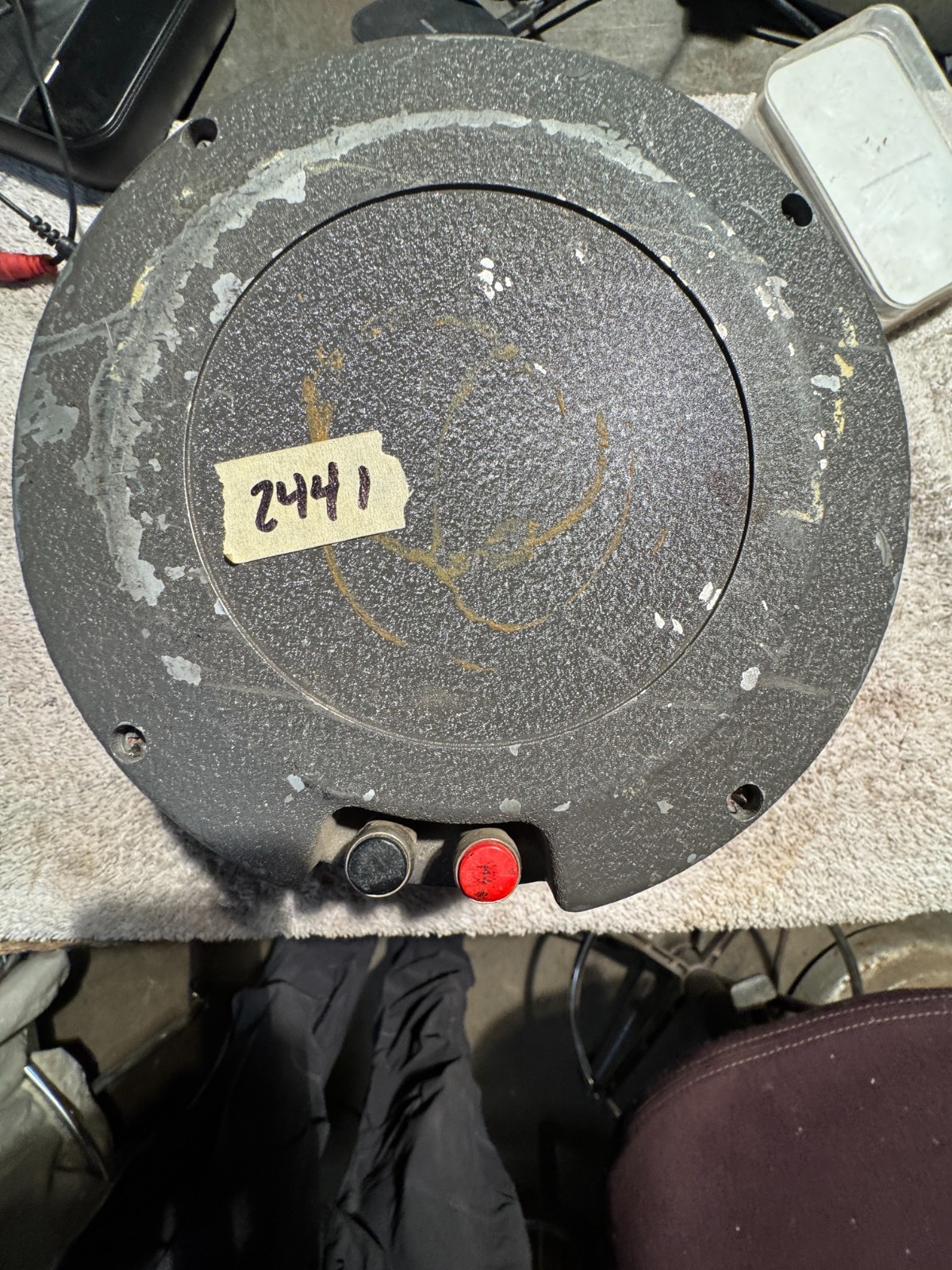


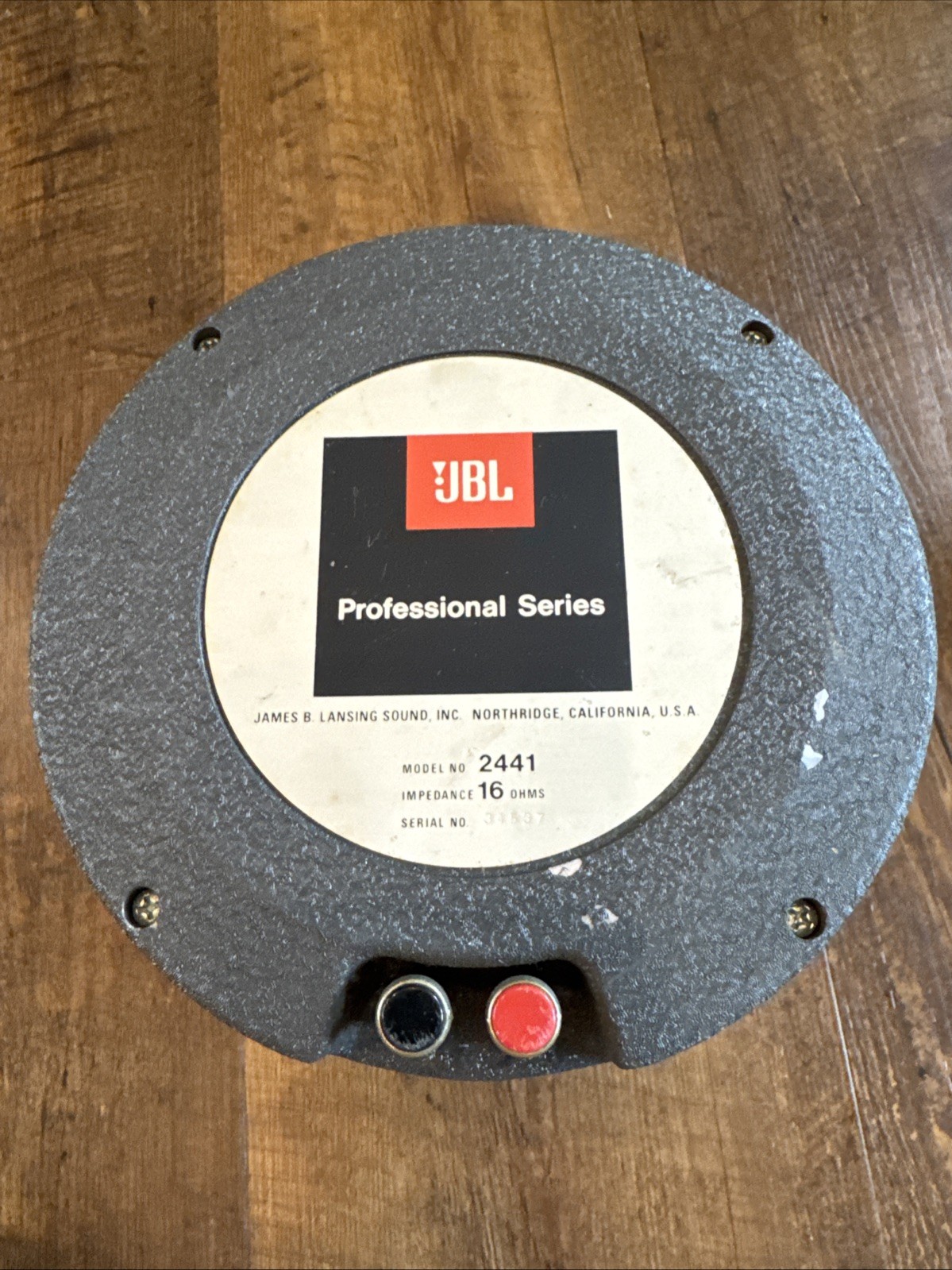
As an eBay Partner, we earn from qualifying purchases. This helps support our independent vintage technology research.
Related Models
- JBL 2206H Woofer (Unknown)
- JBL 033 Tweeter (Unknown)
- JBL 044 Tweeter (Unknown)
- JBL 066 Tweeter (Unknown)
- JBL 122A Woofer (Unknown)
- Altec 421-8H SERIES II
- Altec 421
- Altec 601
- Altec 605
- Altec 808-8A