Bang & Olufsen Beogram 1602 (1975)
At 13.2 pounds, the Beogram 1602 sits with a deliberate heft that tells you this isn’t mass-market gear—it’s Danish engineering with a sculptor’s sense of balance.
Overview
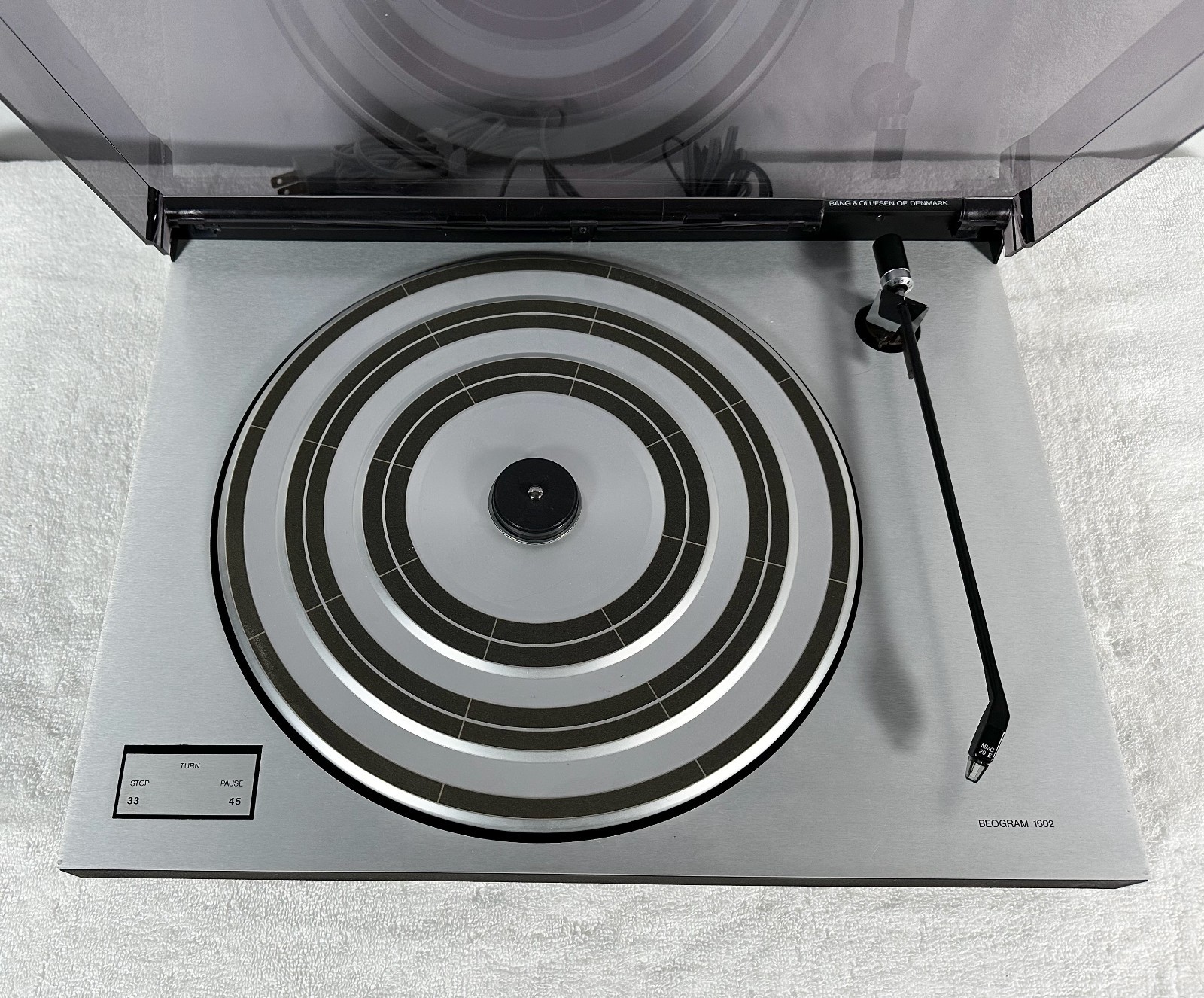
The Bang & Olufsen Beogram 1602, released in 1975, is a manual turntable from the heart of B&O’s golden era of analog design. Part of the respected Beogram series, it was positioned as a premium offering for audiophiles who valued precision, minimalist aesthetics, and mechanical integrity over automation. While it didn’t achieve the same iconic status as the Beogram 4000 or 1200, the 1602 carved out a quiet reputation among purists for its solid build, low-resonance chassis, and compatibility with high-output moving magnet cartridges. Unlike its tangential-arm siblings, the 1602 relies on a conventional 9-inch straight aluminum tonearm, but compensates with thoughtful engineering—adjustable azimuth, anti-skate, and vertical tracking force (VTF) give users fine control over setup. The turntable demands hands-on operation: no auto-start, no cueing assist—just direct engagement with the ritual of vinyl playback.
Key Features
High-Inertia Die-Cast Aluminum Platter (1.8 kg)
The 1.8 kg die-cast aluminum platter delivers stable rotation and excellent speed consistency, a necessity for minimizing wow and flutter. Its mass helps maintain momentum during speed transitions and resists external vibration. Driven by a high-torque AC synchronous motor via a rubber belt, the platter spins with a smoothness that belies its mechanical simplicity. Speeds are selectable between 33⅓ and 45 RPM using a mechanical switch on the motor housing—a tactile, no-nonsense interface typical of B&O’s design ethos.
9-Inch Straight Aluminum Tonearm with Full Adjustability
The tonearm is a low-mass, rigid aluminum tube with precision bearings and a counterweight system for accurate tracking force adjustment. With an effective mass of around 12 grams, it pairs well with cartridges in the 4 to 11 gram range (or 11 to 20.5 grams with sub-weight), making it compatible with a variety of moving magnet designs. Azimuth, anti-skate, and VTF are all user-adjustable, allowing for precise setup. However, owner reports conflict on the correct tracking force: while one listing specifies 15 mN (1.5 grams), others—including user discussions—suggest it should be set to 2 grams. This discrepancy underscores the importance of careful calibration when restoring a unit.
Suspended Sub-Chassis with Silicone-Damped Springs
Isolation is key to the 1602’s performance, achieved through a suspended sub-chassis design supported by four silicone-damped springs. This system decouples the platter and tonearm assembly from external vibrations, reducing feedback and improving detail retrieval. Over time, these springs can lose elasticity, leading to instability—owners note they are replaceable with modern equivalents, though sourcing the correct durometer is critical for proper function.
MMC Cartridge Compatibility and Phono Output
The Beogram 1602 was typically sold with the MM40 or MM50 cartridge—high-output moving magnet designs developed by Bang & Olufsen. These MMC cartridges deliver approximately 5 mV at 1 kHz with a 5 cm/s input and an output impedance of 50 kΩ, making them a good match for standard MM phono inputs. Replacement styli remain available, though many users upgrade to modern cartridges like the Ortofon 2M Red or Shure M97xE for improved fidelity. The turntable lacks a built-in preamp, requiring connection to an external phono stage or receiver with a dedicated phono input, and uses standard RCA phono cables with a grounded connection to prevent hum.
Manual Operation and Hinged Acrylic Dust Cover
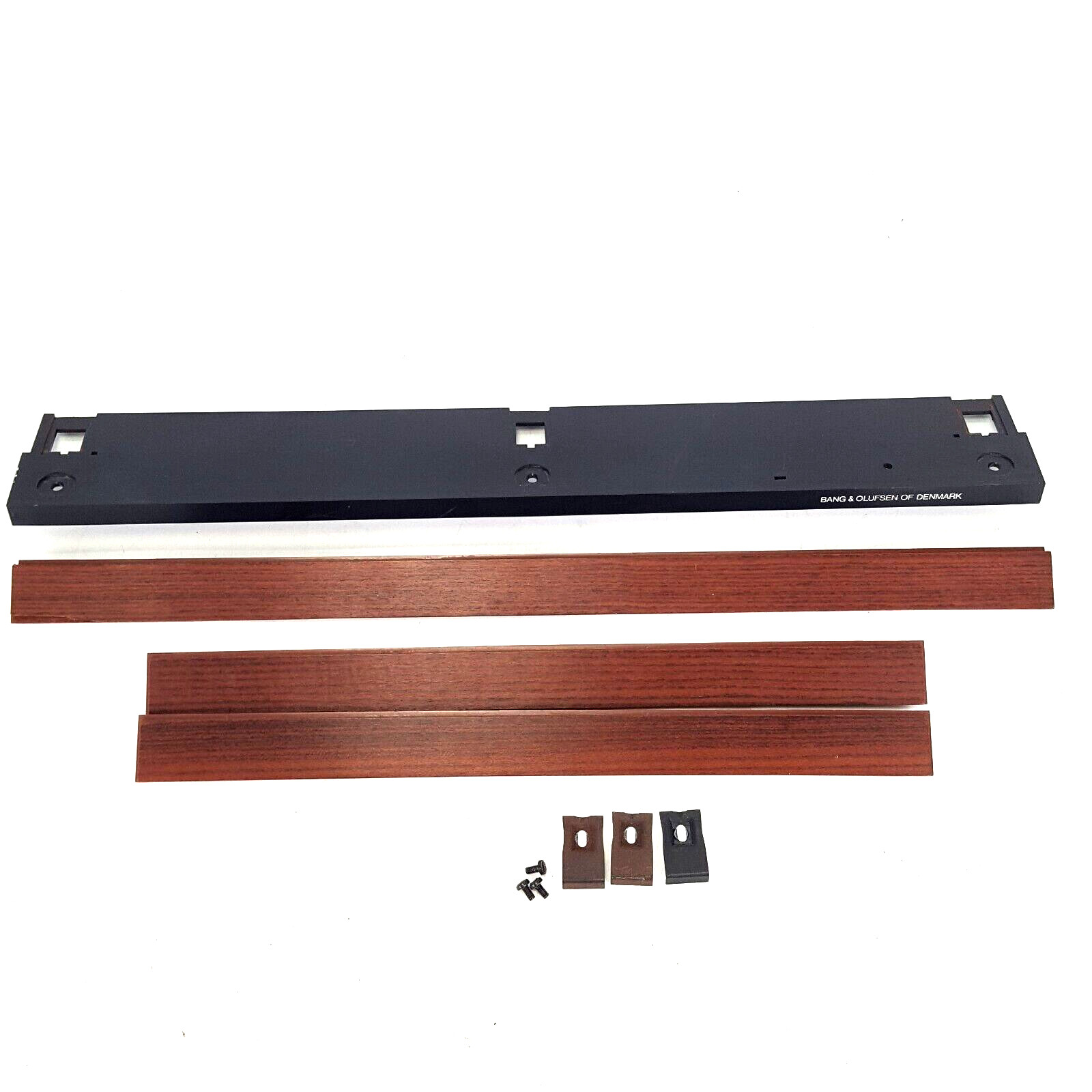
True to its purist orientation, the 1602 offers no automatic functions—users must manually place and lift the tonearm. This hands-on approach appeals to listeners who value control and ritual in playback. The transparent acrylic dust cover lifts smoothly on a hinge, preserving the clean sightlines of the design when open and protecting the platter when closed. Replacement covers and side trim panels occasionally surface on eBay and specialty markets, with one acrylic cover listed at CA$45 on Canuck Audio Mart in 2026.
Historical Context
While those brands emphasized technical innovation or modularity, B&O distinguished the 1602 through its Scandinavian design language—clean lines, functional elegance, and material integrity. Housed in a sleek aluminum and wood-veneer chassis, with a plinth typically crafted from laminated wood and an aluminum top plate, the 1602 reflects mid-century modernist principles. It was never intended to be flashy; its appeal lies in restraint and precision. Though not as widely recognized as other Beogram models, it remains a respected piece within the B&O ecosystem, especially among collectors who appreciate understated engineering.
Collectibility & Value
The Beogram 1602 has developed a cult following, with original units in good condition often commanding $400 to $800 on the secondhand market. Prices vary significantly based on condition and included accessories—listings range from $55 for non-working units to $395 for fully functional models with original cartridges like the MMC 20E. Units described as “powers on, sold as is” appear regularly, underscoring the need for buyer diligence. The rubber drive belt, a common failure point, should be replaced if degraded—a straightforward job using a compatible 8.5 mm O-ring. Cleaning the platter, tonearm, and stylus with a carbon fiber brush and record cleaning fluid is essential for optimal performance. While no original retail price has been documented, its current value reflects enduring demand for well-built, design-forward turntables from B&O’s 1970s era, praised even in its time for combining Danish electronics and woodcraft mastery Amateur-Tape-Recorder (July 1966, p.36).
eBay Listings


As an eBay Partner, we earn from qualifying purchases. This helps support our independent vintage technology research.