AR XA (1961–1970s)
The turntable that redefined what affordable high fidelity could sound like—simple, isolated, and shockingly effective.
Overview
At just 3.3 pounds for the platter, the AR XA feels deceptively light in the hand, but that’s part of its genius—this isn’t a brute-force turntable relying on mass to stabilize playback. Instead, it floats on a bed of mechanical isolation so effective that reviewers at the time described the background silence as “revelatory.” Introduced in 1961 at $58, the XA undercut nearly every serious competitor by hundreds of dollars, yet delivered performance that made it one of the most widely owned high-fidelity turntables of its era. Acoustic Research didn’t just enter the turntable market with this model—they rewrote the rules. The suspended subchassis, belt drive, and minimalist execution weren’t just cost-saving measures; they were a deliberate engineering philosophy aimed at eliminating vibration, rumble, and coloration. The result? A turntable that could extract deep blacks between notes and expose the limitations of the amplifiers and speakers it was paired with.
Edgar Villchur, the mind behind AR’s acoustic suspension speakers, applied the same precision to mechanical design here. The entire playback assembly—the tonearm and platter—was mounted to a rigid bearing plate suspended on three damped springs from the top plate, creating a resonant frequency of around 3–4 Hz. This meant that external vibrations from footfalls, speaker cabinets, or even a nearby door slam were effectively decoupled from the stylus. AR reps famously demonstrated this by thumping the top plate with a hammer while the needle stayed locked in the groove—a party trick that underscored serious engineering. The motor, a low-torque synchronous type, was mounted on the top plate and drove the aluminum platter via a flat belt, preventing motor noise from reaching the record. Early models used a dual-motor system—one to start the main motor in the correct direction—though this was phased out as unnecessary. The belt itself was precision-ground rubber, thin and flexible, designed to absorb cogging and deliver smooth rotation without introducing its own resonance.
It wasn’t a turntable for the lazy. There was no pitch control, no electronic speed selector, and no cueing lever. Speed changes required manually lifting the belt and shifting it between pulley steps—a process that took seconds but ensured user engagement with the machine. The fixed-pivot 9" tonearm had no antiskating mechanism, a deliberate omission by Villchur, who believed proper alignment and a slight increase in tracking force (recommended at 15%) were sufficient. The arm used Delrin components, which over time could absorb moisture, expand, and seize—making inspection of the bearing well critical on any vintage unit. Despite these quirks, the XA sold in the hundreds of thousands, proving that serious sound didn’t require complexity or exorbitant cost. Its industrial design was so influential that the Museum of Modern Art added it to their permanent collection, a rare honor for consumer audio equipment.
Key Features
Suspended Subchassis with 3–4 Hz Resonant Frequency
The heart of the XA’s performance was its three-point spring suspension system, which isolated the platter and tonearm from external vibrations with remarkable effectiveness. The rigid bearing plate, carrying all critical playback components, hung from the top plate on damped springs tuned to a resonant frequency of approximately 3–4 Hz—well below the range where most floor or cabinet vibrations occur. This wasn’t a passive damper; it was an active filtering system that rendered the turntable nearly immune to environmental disturbances. Unlike later suspended designs that could feel overly soft, the XA’s system remained taut and responsive, providing stability without sacrificing tracking accuracy. The suspension was later updated with preload adjustments to improve consistency across production runs, but the core principle remained unchanged throughout its run.
Belt-Drive System with Precision Rubber Belt
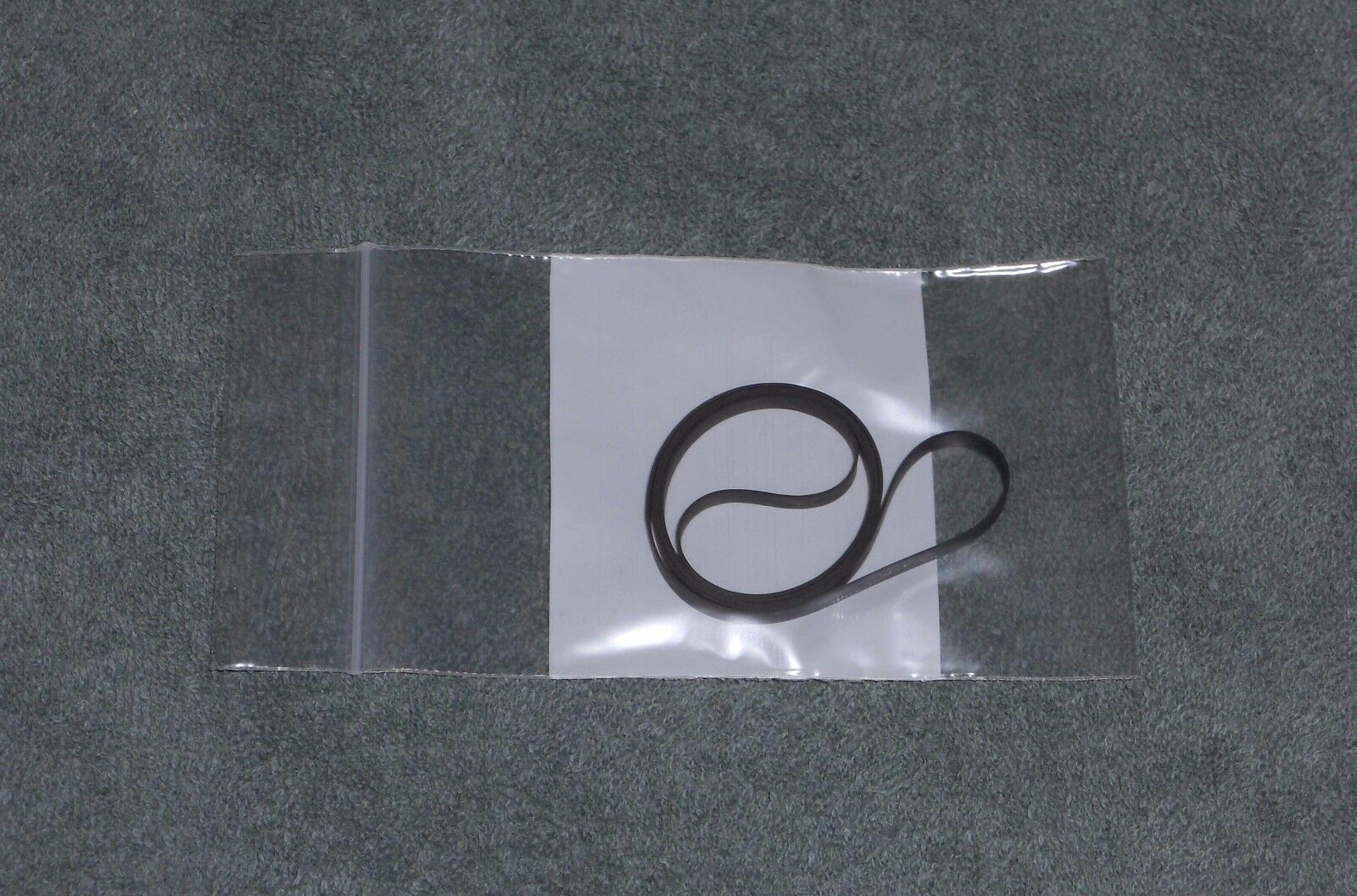
In 1961, most turntables used idler-wheel or direct-drive mechanisms that transmitted motor noise directly into the platter. The XA’s belt drive was revolutionary not because it was new, but because AR made it reliable and accessible. The synchronous AC motor—available in both Philips and Haydon 1159 variants—ran quietly and consistently, with speed accuracy derived from the 60 Hz AC line frequency (50 Hz versions also existed). The flat belt, made of precision-ground rubber, was thin and flexible enough to absorb motor irregularities while maintaining consistent platter rotation. This contributed directly to the XA’s exceptional wow and flutter performance, rated at better than 0.1% (weighted), and its subsonic rumble measurement of –65 dB (A-weighted). The lightweight aluminum platter, while lacking the flywheel effect of heavier designs, didn’t suffer from speed instability thanks to the motor’s precision and the belt’s damping properties.
Manual Speed Selection and Minimalist Control Interface
Changing speeds meant lifting the belt and moving it to the appropriate step on the pulley, a tactile process that eliminated electronic switching noise and ensured the user remained connected to the machine’s operation. The system supported two speeds—33⅓ and 45 RPM—selected entirely by belt position. This simplicity reduced failure points and contributed to the turntable’s long-term reliability. The lack of a cueing lever meant users had to lower the tonearm by hand, but the stable plinth and isolation system made this manageable. The hinged clear-plastic dust cover was designed to remain open when fully raised, and early models were intended for use without it—Villchur believed any cover could resonate and degrade sound. Later, the XB model allowed cover use during playback, but many argue this compromised the XA’s original acoustic purity.
Fixed-Pivot 9" Tonearm with Standard ½" Mount
The stock tonearm, while functional, was a study in minimalism. With a 9" effective length and adjustable overhang via a sliding base, it accommodated a wide range of cartridges using the standard ½" mount—compatible with popular models from Shure, Pickering, and Ortofon. Tracking force was adjustable via a counterweight, ranging from 0 to 3 grams, but antiskating was absent. Instead, the manual recommended increasing tracking force by 15% to compensate, a controversial but deliberate design choice. The arm’s Delrin construction, while dimensionally stable initially, is prone to moisture absorption over decades, leading to binding or seized bearings—a common failure point in unrestored units. Signal was carried through fixed, low-mass stranded wire, minimizing microphonics but making repairs fiddly if the leads broke. Despite its limitations, the arm performs admirably when properly maintained, especially with modern moving-magnet cartridges like the Ortofon OM5 or Shure M97xE. Some owners upgrade to arms like the Rega 2400 or SME 3009, though purists argue this disrupts the XA’s balanced design.
Historical Context
The AR XA arrived in 1961 at a time when high fidelity was still a niche pursuit, dominated by expensive European components or bulky American consoles. Most turntables were either low-performance record changers or prohibitively expensive broadcast decks. The XA shattered that dichotomy, offering true high-fidelity performance at a price point—$58—that undercut competitors by hundreds of dollars. It was designed for the growing middle-class audiophile, someone who wanted serious sound without selling a kidney. Its success was immediate: AR sold hundreds of thousands of units, making it one of the most widely owned turntables of its era. The suspended subchassis and belt-drive layout were so influential that they became standard in mid- and high-end designs, with companies like Linn and Thorens acknowledging their debt to Villchur’s vision. The XA’s industrial design was so respected that the Museum of Modern Art added it to their permanent collection. By the time the XB replaced it in the 1970s—adding cueing and allowing dust cover use—the XA had already cemented its legacy as a foundational design in analog playback.
Collectibility & Value
As High-Fidelity (January 1965, p.41) noted, the AR-4 was a best buy that attracted interest across price brackets—an early sign of AR's impact on affordable high fidelity. The AR XA is both common and rare—common in that tens of thousands were made, rare in that few survive in original, unmodified condition. A project unit with seized bearings and frayed wiring might sell for $50, while a fully restored XA, with new motor, upgraded power cable, and recalibrated suspension, can fetch $250–$400. Mint-in-box examples, especially with original accessories like the stylus force gauge or dust bug, have sold for over $500. The most critical inspection point is the Delrin platter bearing well and tonearm post, which can absorb moisture and expand over time, leading to seized components. If the platter doesn’t spin freely or the arm binds, a full teardown is likely needed. The original wiring, particularly the tonearm leads, is prone to breakage and requires careful handling. The motor, while generally reliable, can lose torque or develop hum if not cleaned and lubricated. Restoration is well-documented, with companies like Vinyl Nirvana specializing in servicing XAs. The “Merrill Mods”—named after technician Merrill Bergmann—remain popular, including upgraded motors, acrylic platter mats, and full rewiring. Despite its age, the XA remains a viable entry-level vintage turntable, prized for its simplicity, effectiveness, and historical significance.
eBay Listings


As an eBay Partner, we earn from qualifying purchases. This helps support our independent vintage technology research.