Advent 3002 (1978–1983)
A compact bookshelf speaker that punches way above its size with honest, uncolored sound—just don’t expect it to survive the decades without a rebuild.
Overview
At 18 pounds and just under 15 inches tall, the Advent 3002 doesn’t announce itself with grandeur—but it was never meant to. This is a speaker built for listening, not show, engineered during the twilight of Henry Kloss’s influence at Advent, when the company still prioritized sonic accuracy over marketing flair. Released in 1978 as part of a new wave of compact designs, the 3002 carved out a niche between the budget-oriented /1 and the flagship /4, offering a taste of Advent’s acoustic suspension philosophy in a footprint that fit real-world living spaces. It wasn’t the largest, loudest, or most visually striking speaker in the lineup, but it delivered something more valuable: a transparent, uncolored window into the recording, free of the colorations that plagued so many contemporaries.
The 3002’s design reflects a clear trade-off: Advent sacrificed deep bass extension for a smaller cabinet and lower cost, targeting buyers who wanted serious sound without dedicating floor space to towering speakers. The result was a 2-way bookshelf loudspeaker that managed a credible 48 Hz low-frequency limit—respectable for its size in the late 1970s—thanks to its sealed acoustic suspension enclosure. This design choice avoided the port noise and bass bloat of reflex cabinets, instead delivering tight, controlled low end that integrated smoothly with the midrange. Paired with a capable amplifier, the 3002 could disappear sonically, leaving behind a precise soundstage where instruments occupied distinct, stable positions.
Up top, the 1-inch “Direct Report” dome tweeter was flush-mounted to reduce diffraction and deliver a smooth off-axis response, a thoughtful touch that paid dividends in imaging and listener fatigue. Unlike many era speakers that leaned into brightness to sound “detailed,” the 3002 erred on the side of neutrality, offering a high end that was extended but never harsh. That restraint, however, could make the speaker sound a bit laid-back when paired with warm electronics, prompting some owners to swap in modern tweeters for extra sparkle—though purists argue that such modifications miss the point of its original design.
Still, the 3002 was not without limitations. Its compact cabinet and acoustic suspension design meant it couldn’t compete with larger speakers in raw output or sub-bass authority. It was never intended for home theater or high-decibel listening, but rather for critical two-channel setups where clarity and timing mattered more than sheer power. And while its engineering was sound, its longevity was not: like most speakers of its era, it relied on foam surrounds and electrolytic capacitors that degrade predictably over time. A pair found today is almost certainly in need of re-foaming and recapping to perform as intended.
Key Features
Acoustic Suspension in a Compact Form
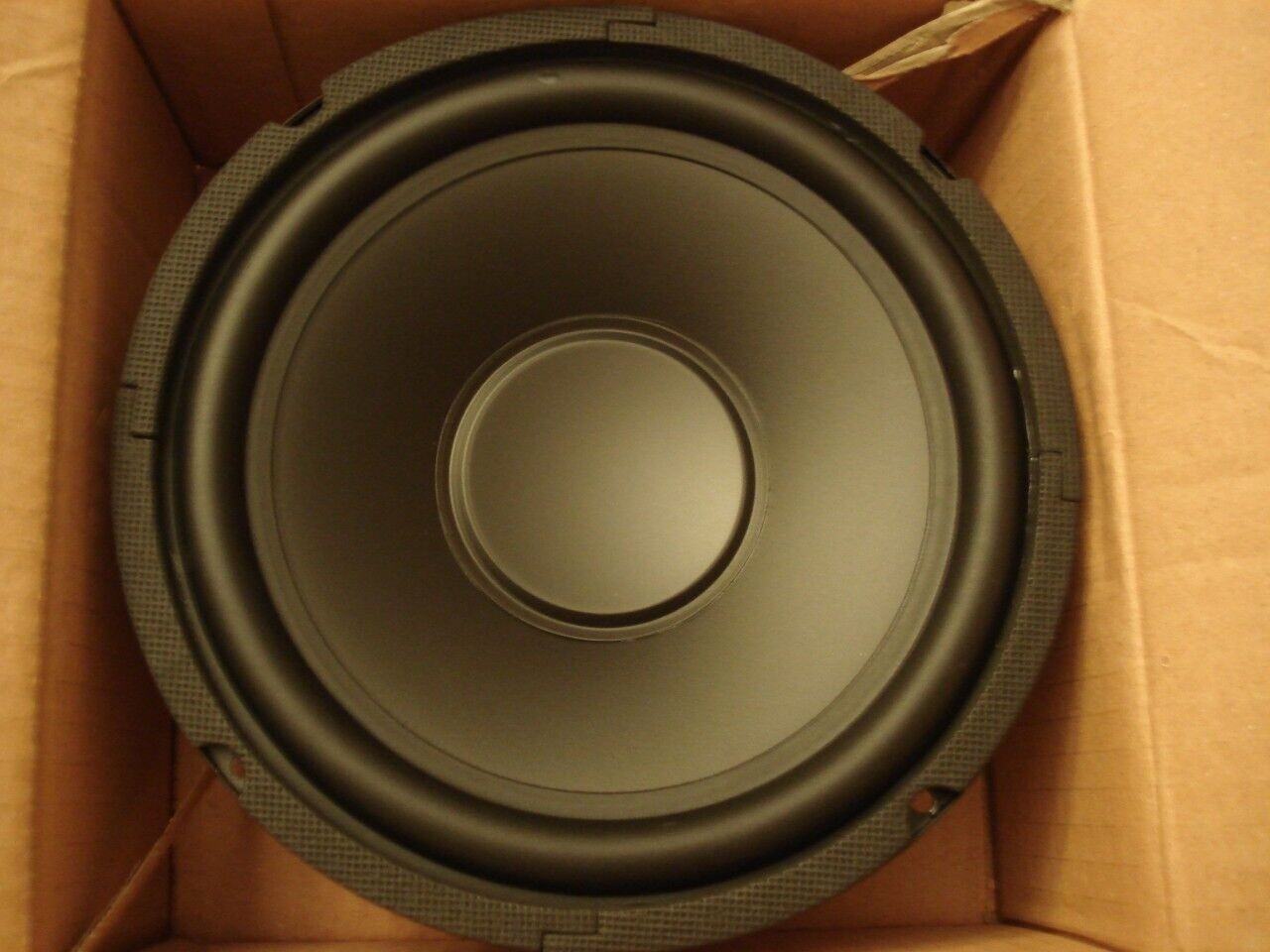
The 3002’s sealed cabinet design is a direct descendant of Henry Kloss’s work at Acoustic Research, where he pioneered the use of air-spring loading to tighten bass response. By forgoing a port, Advent avoided the time-smearing and resonance issues common in vented designs, resulting in bass that starts and stops with precision. The trade-off was a -3 dB point at 48 Hz—adequate but not deep—making the 3002 better suited to acoustic jazz, vocals, and chamber music than electronic or orchestral fare. The 8-inch woofer, housed in a high-density composition board cabinet, delivers punchy, articulate low end that never overhangs, a hallmark of well-executed acoustic suspension. However, the design demands a capable amplifier; underpowered receivers struggle to control the driver, leading to flabby, undefined bass.
Direct Report Tweeter with Smooth Dispersion
The 1-inch dome tweeter, marketed as “Direct Report,” is flush-mounted to the baffle to minimize edge diffraction, a design choice that enhances off-axis response and contributes to the speaker’s wide, stable soundstage. Its frequency response extends to 23 kHz ±3 dB, ensuring full reproduction of high-frequency detail without the grain or sibilance that plagued many 1970s dome tweeters. The dispersion is tightly controlled, with less than ±1 dB variance at 30° horizontally or vertically up to 13 kHz, meaning the tonal balance remains consistent even when not seated directly on-axis. This makes the 3002 forgiving in less-than-ideal listening environments, though its neutrality demands careful system matching—pair it with warm electronics, and the overall sound can become overly mellow.
2,800 Hz Crossover with Refined Integration
The crossover network, set at 2,800 Hz, routes signals between the 8-inch woofer and 1-inch dome tweeter with a slope consistent with Advent’s 2-way designs of the era. This frequency was chosen to avoid the critical midrange region, where the ear is most sensitive, allowing both drivers to operate in their optimal ranges. The result is a seamless transition between drivers, free of the “crossover hump” or suckout that can plague poorly aligned systems. However, the crossover relies on electrolytic capacitors that degrade over time, leading to dull highs and imbalanced tonality if not recapped. Service technicians note that many surviving units have already undergone DIY recapping, sometimes with mismatched components, so buyers should inspect the board carefully.
Industrial Build for Mass Appeal
Gone is the curved front and walnut veneer of the original Large Advent. The 3002 wears a utilitarian look: straight-edged cabinet, walnut grain vinyl wrap, and a fabric-covered rectangular grille. The high-density composition board resists cabinet resonance better than particleboard, contributing to a clean, uncolored sound, but the finish doesn’t age gracefully—peeling and bubbling are common on unrestored units. The compact dimensions (14.5 × 8.5 × 8.75 inches) make it one of the few vintage Advents that still fit on modern shelves without looking out of place. At approximately 18 lbs per speaker, it’s substantial enough to feel serious but light enough to position easily. The 8 Ω nominal impedance (7 Ω minimum) makes it compatible with most solid-state amplifiers, and
Historical Context
The 3002 arrived in 1978 as part of Advent’s second generation of speakers, a period when the company was transitioning from its golden era under Henry Kloss to a more corporate structure. The original Large Advent (1967) had redefined affordable high fidelity, but by the late 1970s, the market was crowded with competitors like AR, KLH, JBL, and the rising Bose. Advent needed a new lineup that balanced performance and price, and the 3002 was a key part of that strategy—a modernized, compact alternative to the flagship /4. It shared design DNA with the /1 and /4 but refined it with better materials and a more sophisticated crossover.
The 3002, along with the rest of the x002 series (2002, 4002, 5002), represented the last gasp of Advent’s engineering-driven ethos before Kloss’s departure and Jensen’s acquisition shifted the brand toward budget-oriented models. Advent was positioning these models with "removable metal grille," though the 3002 actually used vinyl-wrapped composition board and a fabric grille—suggesting some marketing overreach. Still, the 3002 was marketed as a premium compact, more refined than the /1 and more accessible than the /4, filling a gap for listeners who wanted Advent’s sonic signature without the footprint.
Collectibility & Value
Finding a pair of Advent 3002s in working condition is rare; finding one that hasn’t been re-foamed is rarer. The foam surrounds on the 8-inch woofers degrade predictably, turning to dust within 30–40 years. Left unchecked, this leads to flapping cones, distorted bass, and eventual failure. Re-foaming is not optional—it’s the first step in any restoration. Replacement kits are available from specialty vendors like The Speaker Exchange and AV Parts, with DIY repair costing $20–$30 per speaker and requiring no advanced tools.
Equally critical is the crossover. The electrolytic capacitors dry out over time, leading to dull highs, weak mids, and imbalance. Recapping is strongly recommended, though it requires basic soldering skills. Many units have already been recapped—sometimes poorly—so buyers should inspect the board for mismatched parts or botched joints. Cabinet integrity is another concern: the composition board can swell if exposed to moisture, and the rear terminal plates sometimes corrode. Original grilles are often missing or damaged, but replacements are available.
Unrestored pairs sell for $75–$150 on eBay, typically listed as “for parts or restoration.” Fully restored pairs—with new foam, recapped crossovers, and clean cabinets—command $250–$400. The walnut grain vinyl finish is not highly prized, so refinishing or painting doesn’t hurt value. The 3002 is not a “set and forget” vintage speaker, but for those willing to invest the effort, it remains a compelling listen—offering a classic, neutral sound that still holds up against modern budget monitors.
eBay Listings

As an eBay Partner, we earn from qualifying purchases. This helps support our independent vintage technology research.