Acoustic Research AR-3a (1967–1976)
At 14 inches tall, it stands like a sentry—compact for its era, yet dense with engineering that rewrote the rules of speaker accuracy.
Overview
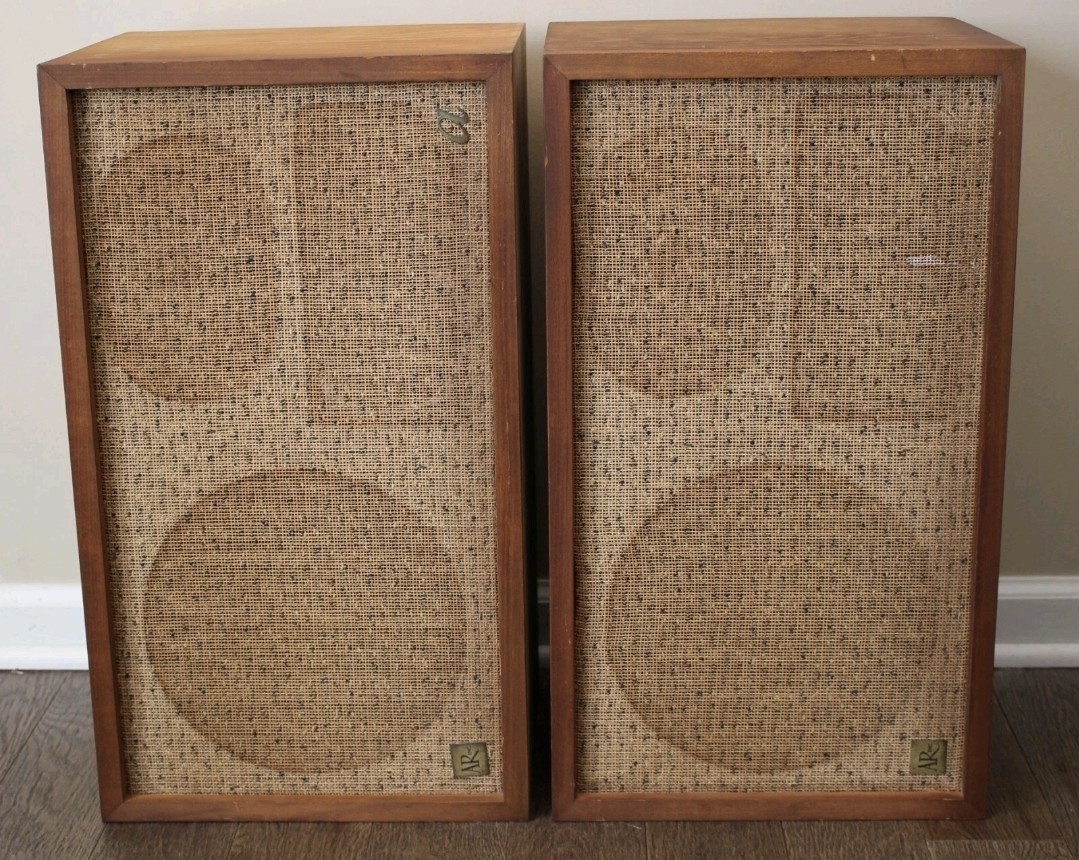
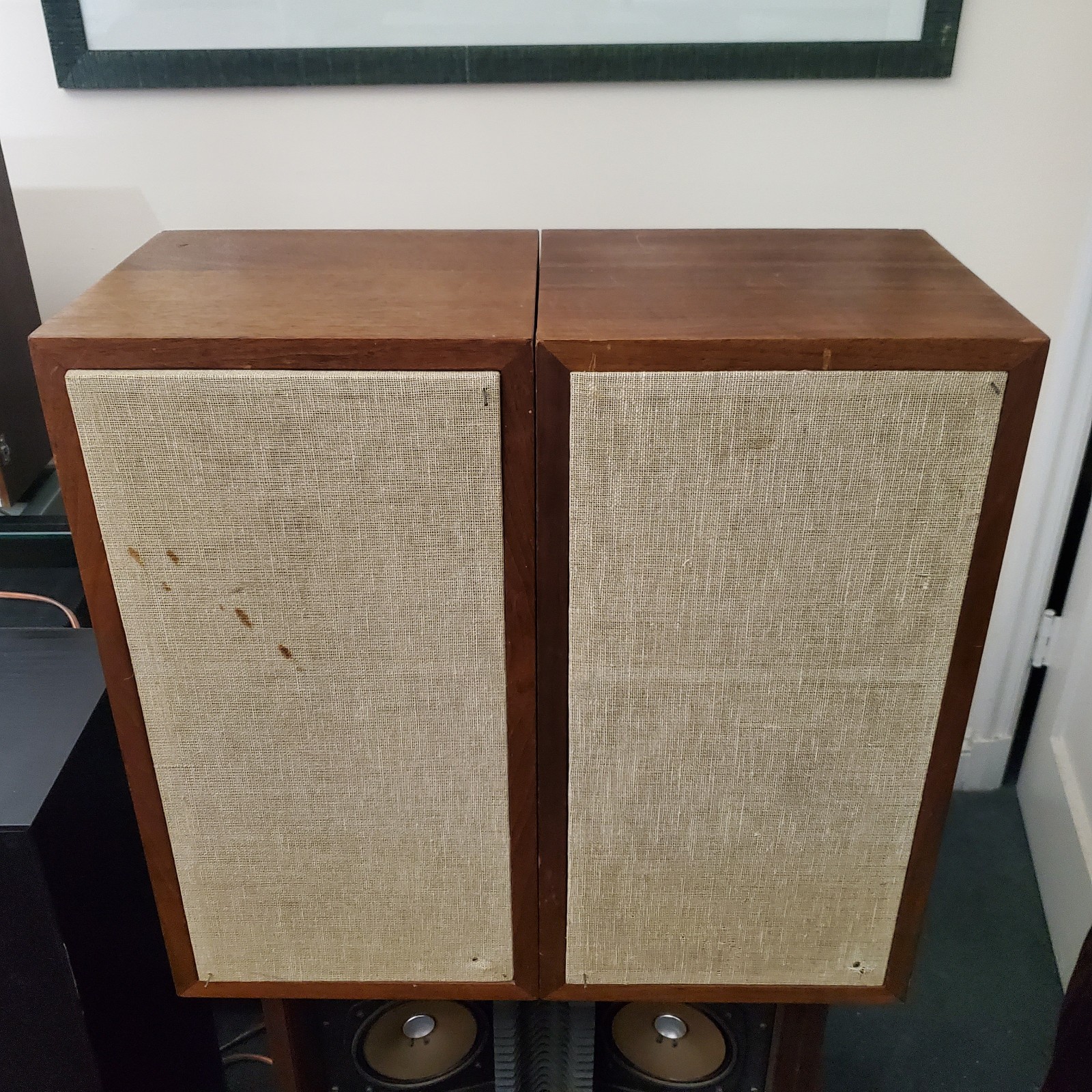
The Acoustic Research AR-3a isn't just a speaker; it's a declaration of intent from a company that believed high fidelity meant reproducing sound as it was recorded, not as a marketing department imagined it. Produced from 1967 to 1976, the AR-3a represents the pinnacle of acoustic suspension loudspeaker design and is widely regarded as the finest speaker Acoustic Research ever built. Its 12-inch woofer, sealed enclosure, and improved dome midrange and tweeter set a benchmark for neutrality and precision that few contemporaries could match. That neutrality made it a reference standard in studios and audiophile homes alike, a role it still plays today when properly restored. High-Fidelity (July 1961, p.23) noted that "the frequency response of every AR speaker is checked in an anechoic chamber before it is shipped," a rare practice at the time that underscores the company’s commitment to consistency and accuracy.
Key Features
Acoustic Suspension Enclosure
The sealed cabinet isn’t just a box—it’s the foundation of the AR-3a’s sonic identity. Unlike ported designs that rely on tuned resonance to extend bass, the AR-3a’s acoustic suspension system uses the air inside the 14" × 10" × 23.5" enclosure as a spring to control the 12-inch woofer’s movement. This results in tight, articulate low frequencies down to 38Hz, with minimal distortion. The trade-off, as collectors note, is lower sensitivity—those woofers demand amplifier headroom to perform. But when driven properly, the bass remains controlled even at high volumes, avoiding the one-note boom that plagues lesser designs.
Improved Dome Midrange and Tweeter
Building on the legacy of the AR-3, the 3a introduced upgraded dome drivers that contributed significantly to its refined sound. The midrange and tweeter—both dome types, though exact sizes aren’t documented—deliver a seamless transition across the upper spectrum. The result is a neutral, uncolored tonal balance that avoids the forwardness or harshness common in other speakers of the era. However, owners report that the crossover’s capacitors, if original, should be replaced—electrolytics from the 1970s rarely survive with their original performance intact.
Real Wood Veneer and Grille Cloth
The cabinet is clad in real walnut or teak veneer, materials that not only age gracefully but also contribute to the speaker’s perceived quality. Original grille cloth was typically brown or black, and while reproductions are available, purists insist the correct fabric affects high-frequency diffusion. and many owners choose to run the speakers bare to maximize clarity.
Historical Context
Introduced in 1967 as an evolution of the groundbreaking AR-3, the AR-3a arrived during the golden age of American hi-fi, when accuracy was prized over spectacle. It competed directly with the KLH Model Five and shared design DNA with it—both were sealed-box speakers aimed at critical listeners. But where KLH leaned slightly warmer, the AR-3a pursued a flatter, more analytical response. It became a favorite in music studios and concert halls, where engineers needed to hear what was actually on the tape. HiFi-Stereo (July 1975, p.79) noted that the AR-11 was "the most accurate speaker system ever made by Acoustic Research," highlighting the legacy of the AR-3a. The speaker’s neutral character made it a reference standard for decades, influencing generations of monitor designs that followed.
Collectibility & Value
Today, the AR-3a commands strong prices on the secondary market, especially in original, unrestored condition. Pairs from the earliest production runs (1967–1968) are the most collectible, with serial numbers serving as a key authenticity marker. In excellent, all-original condition, a pair can fetch $800 to $1,500, while those with minor restoration—such as replaced foam surrounds or recapped crossovers—typically sell for $500 to $800. Replacement foam kits are readily available from specialists like Simply Speakers, and both cabinet refinishing and grille cloth reproduction are well-documented processes. Despite the age, prices have risen steadily as vintage AR gear gains recognition among younger audiophiles. A recent eBay listing for an all-original pair with video verification sold for $1,188, underscoring the demand for fully intact examples. However, as the community notes, "the key is proper restoration and adequate amplification—don't expect greatness from a low-powered receiver."
eBay Listings


As an eBay Partner, we earn from qualifying purchases. This helps support our independent vintage technology research.
Service Manuals, Schematics & Catalogs
Related Models
- Acoustic Research AR-1 (1954)
- Acoustic Research AR-12 (1974)
- Acoustic Research research-ar-17 (1978)
- Acoustic Research AR-18BX (1980)
- Acoustic Research AR-19 (1994)
- Quad 44/405-COMBINATION (1976)
- Braun AUDIO-1 (1965)
- Braun AUDIO-250 (1965)
- Braun AUDIO-310 (1965)
- Magnavox Component Systems (1972)